
In the Texas Panhandle, we hear the same thing from owners in Amarillo, Canyon, and the smaller towns out toward Pampa: “It should be simple. They didn’t pay. I just need them out.”
That’s the trap.
A Texas eviction isn’t a “property problem.” It’s a court process about possession, and the rules punish shortcuts. DIY evictions fail most often for one reason: landlords treat them like a tough conversation instead of a timeline-driven legal procedure—then they get bounced on a technicality, reset to day one, and lose another month (or two) of rent.
This article explains why DIY evictions fail in practice, what Texas generally expects in the process, and how Panhandle-specific realities (wind/hail damage, winterization issues, local JP precinct logistics) can make a shaky DIY attempt collapse.
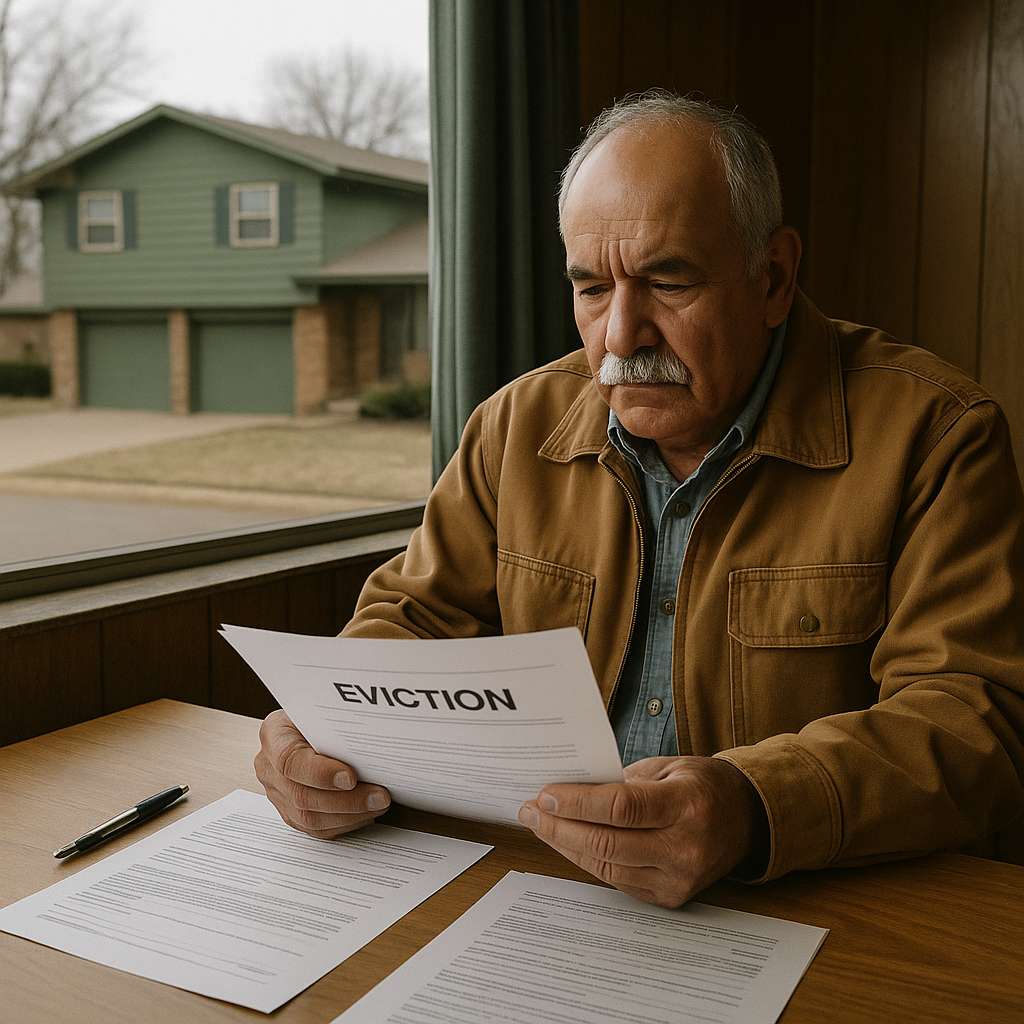
The real goal of an eviction (and what “winning” looks like)
A successful eviction usually means:
- You regain possession as quickly as the process allows.
- You avoid “self-help” moves that create tenant defenses or counterclaims.
- You keep your documentation clean enough that the judge can follow it in minutes.
In practice, most landlords don’t lose because they’re “wrong” on the facts. They lose because they can’t prove the timeline, can’t prove proper notice/service, or they accidentally step on a tenant protection (retaliation, fair housing, improper lockout, etc.).
If you want the full step-by-step from an Amarillo owner perspective, start here: Eviction Process Guide for Amarillo Owners.
How the Texas eviction process generally works (high level)
Texas treats eviction as a structured sequence. The details can vary by lease terms and court practice, but the core steps look like this:
1) Notice to vacate: where most DIY evictions die
Under Texas Property Code § 24.005, landlords generally give a written notice to vacate and wait the required time before filing (commonly at least three days unless the lease or law provides a different period). If your notice is late, vague, delivered wrong, or you file too early, you often get delayed or dismissed.
DIY failure modes we see a lot:
- Using the wrong notice period because “three days” got repeated on the internet (your lease may change the timing).
- A notice that doesn’t clearly state the deadline.
- No proof of delivery—because it was “just a text” or “I’m sure they got it.”
- A notice that mixes messages (“pay by Friday and we’re good”) that muddles whether you’re actually demanding possession.
If you’re dealing with nonpayment specifically, don’t wing it: How to Handle Late Rent Legally in Texas walks through the process mindset and the common owner missteps.
Panhandle reality: weather disputes can complicate notice timing
In Amarillo and Canyon, big wind events, hailstorms, and hard freezes can trigger repair disputes right when rent goes late. If your maintenance response is sloppy and then you slap down a notice, you may be walking into a retaliation argument (more on that below). The eviction might still be appropriate—but the paperwork and timeline have to be clean.
2) Filing in the correct Justice Court precinct
Texas eviction cases are filed in the Justice Court precinct where the property is located (not where you live, not where your PO box is, and not where your buddy “always files”).
This is a surprisingly common DIY failure in the Panhandle because:
- Amarillo addresses can land in different precincts.
- Owners sometimes confuse Potter County vs. Randall County when they own in both Amarillo and Canyon.
File in the wrong place and you’re buying yourself a delay or a full restart.
3) Service and hearing: “they know about it” isn’t the same as service
A landlord telling a tenant about a hearing date is not a substitute for proper service. Courts have rules about how and when a tenant must be served with the lawsuit paperwork, and defective service can mean a reset.
DIY evictions often fail here because landlords:
- Assume texting the petition counts.
- Hand papers to the wrong person.
- Show up unprepared when the tenant claims they weren’t properly served.
4) Judgment, appeal window, and writ of possession
Even if you win in court, you typically still have to respect the appeal window and follow the procedure to request a writ of possession if the tenant doesn’t leave.
The big point: you don’t “physically remove” anyone yourself. The constable (or sheriff, depending on the area) enforces the writ—not the owner.
Why DIY evictions fail: the “avoidable” mistakes
Most failures fall into a handful of categories.
Mistake 1: Weak documentation (the judge can’t read your mind)
Judges want a clean story:
- What lease rules apply?
- What happened?
- What was served?
- When was it served?
- What proof do you have?
If your rent ledger is “some Venmo screenshots,” your lease is missing addenda, and your notices aren’t dated with delivery proof, the case becomes an argument instead of a timeline.
A good property management system exists to prevent this exact situation. If you want a reality check on what a pro actually handles behind the curtain, read: What a Property Manager Actually Does.
Mistake 2: Accepting rent at the wrong time (and accidentally weakening your case)
Owners often accept partial rent after serving a notice or after filing because they’re trying to be reasonable.
Sometimes that “reasonable” choice becomes Exhibit A for the tenant: “They took my money, so they waived it.” Whether that argument works depends on timing, documentation, and lease language—but DIY landlords frequently don’t document a proper reservation of rights.
If you’re already on the eviction track, treat payments like a strategy decision, not a casual transaction.
Mistake 3: Retaliation risk (especially after repair complaints)
Texas Property Code § 92.331 restricts landlord retaliation in certain circumstances. Retaliation can also be a defense in an eviction suit (see § 92.335).
Here’s how DIY gets landmined in the Panhandle: a tenant complains about a heater, water leak, or storm damage; the owner gets frustrated; then the owner “starts the eviction.” Even if nonpayment is real, your texts and timeline matter.
This isn’t legal advice—just operational reality: if there’s been a recent complaint, keep your communications calm, document your maintenance response, and make sure your eviction basis is consistent and well-supported.
Mistake 4: “Self-help” moves that blow up the whole situation
When landlords panic, they do landlord-things that feel logical and are usually disastrous:
- Changing locks to “pressure” a move-out
- Shutting off utilities
- Removing a tenant’s belongings
- Threatening to show up with friends and a trailer
Texas has specific rules on lockouts (Texas Property Code § 92.0081) and the eviction process is built around court control of possession. The fastest way to turn a clean nonpayment case into a mess is to try to force the move without the court/writ process.
Mistake 5: Using the wrong kind of notice for the situation
Not every problem is “pay or vacate.” Lease violations, unauthorized occupants, pets, criminal activity, and holdover situations can require different documentation and a different approach.
If you’re unsure what notice makes sense, it’s better to slow down and get the process right than to rush and restart. This overview helps owners think clearly about the options: Landlord’s Guide to Notice Types in Texas.
Mistake 6: Underestimating how local process details affect timelines
Even though Texas law sets the framework, your experience is shaped by the local Justice Court’s procedures, calendars, and service realities.
In the Amarillo area, we commonly see DIY owners get stuck on simple logistics:
- Not knowing the correct JP precinct for the property address
- Not budgeting time for service attempts
- Expecting a “next-day” hearing schedule
- Showing up without clean copies of the lease, notices, and payment ledger
That’s not a moral failure. It’s just what happens when someone who has a full-time job tries to do litigation-adjacent work on evenings and weekends.
One bullet list: the DIY eviction checklist that prevents most failures
Use this as a sanity check before you spend another dollar or another week:
- Confirm the lease terms (notice periods, late fees, cure rights, how notices are delivered)
- Create a clean rent ledger (charges, payments, dates, balances)
- Draft the correct notice to vacate with a clear deadline and keep proof of delivery
- Confirm the correct JP precinct based on the property address
- Keep communications professional (no threats, no “extra-legal” pressure)
- Do not attempt a self-help lockout or removal
- Show up with organized evidence (lease + addenda, notices, photos, repair history, communications)
When DIY evictions make sense (and when they don’t)
DIY might work if you:
- Have clean paperwork and strong systems
- Can follow instructions to the letter
- Have time to track deadlines and appear in court
- Can stay emotionally neutral when the tenant pushes back
DIY usually doesn’t work when:
- The tenant is contesting repairs, habitability, or retaliation
- You’ve accepted partial payments inconsistently
- There are roommate/occupant complications
- Your documentation is scattered
- You’re managing from out of town (common for Panhandle investors)
If you’re weighing that choice overall, this is a good companion read: Pros & Cons of Self-Managing a Texas Rental.
The bottom line: DIY evictions fail because the process is unforgiving
In the Panhandle, the owners who get burned on evictions aren’t usually bad landlords—they’re just trying to “handle it themselves” without a litigation-grade process.
If you want fewer surprises, the winning strategy is boring: tight lease enforcement, clean accounting, documented maintenance, correct notices, and a consistent process that holds up in court.
If you want help building that system—or you’re already mid-situation and want a second set of experienced eyes—Book a Management Consultation
Frequently Asked Questions
Why do DIY evictions Texas landlords try in the Panhandle often fail?
DIY evictions for Texas landlords in the Panhandle often fail because eviction is a strict legal process focused on possession, not just a simple tenant issue. Common failures include improper notice timing, filing in the wrong Justice Court precinct, defective service of paperwork, weak documentation, and accidental landlord actions like self-help lockouts, all of which can cause delays or dismissals.
What are the key steps Texas landlords must follow to successfully evict a tenant in Amarillo?
Landlords in Amarillo must first provide a clear written notice to vacate respecting the notice period in their lease or the law. They must then file the eviction case in the correct Justice Court precinct where the property is located, ensure proper legal service of the eviction papers on the tenant, attend the hearing with strong documentation, and if successful, follow the process to obtain a writ of possession executed by the constable or sheriff.
How can local Panhandle conditions affect eviction attempts by landlords?
Local Panhandle realities like harsh weather events (wind, hail, freezes) can complicate eviction timing due to repair disputes or tenant complaints about habitability. These issues increase the risk of retaliation defenses, so landlords must carefully document maintenance responses and maintain clear, professional communication to avoid pitfalls during the eviction process.
What are common mistakes landlords make when handling DIY evictions in Texas that cause delays?
Common mistakes include sending incorrect or vague notices without proof of delivery, filing cases in the wrong Justice Court precinct, failing to properly serve eviction papers to tenants, accepting partial rent payments improperly, risking retaliation claims by poorly handling repair complaints, and attempts at self-help lockouts or utility shutoffs which violate Texas law and jeopardize the case.
When should landlords in the Amarillo area consider not doing a DIY eviction?
Landlords should avoid DIY evictions when tenants contest repair issues, habitability, or retaliation claims, or if there are complicated cases involving partial payments, roommates, or scattered documentation. Also, out-of-town investors or landlords without time to carefully track deadlines and manage court appearances will find DIY evictions especially challenging in the Amarillo and greater Texas Panhandle area.