
Why stress-test a rental for vacancies before you buy
If you’re a residential investor in the Texas Panhandle, you need to know how empty days affect your rental’s financial health. To stress-test a rental for vacancies, model what happens when occupancy drops and rent stops coming in for a while. Vacancies are not just “empty units.” They are lost revenue, tighter cash flow, and sometimes a very rude math problem.
In short, a good vacancy review helps you protect your investment before the market tests it for you.
What Is Vacancy Stress-Testing?
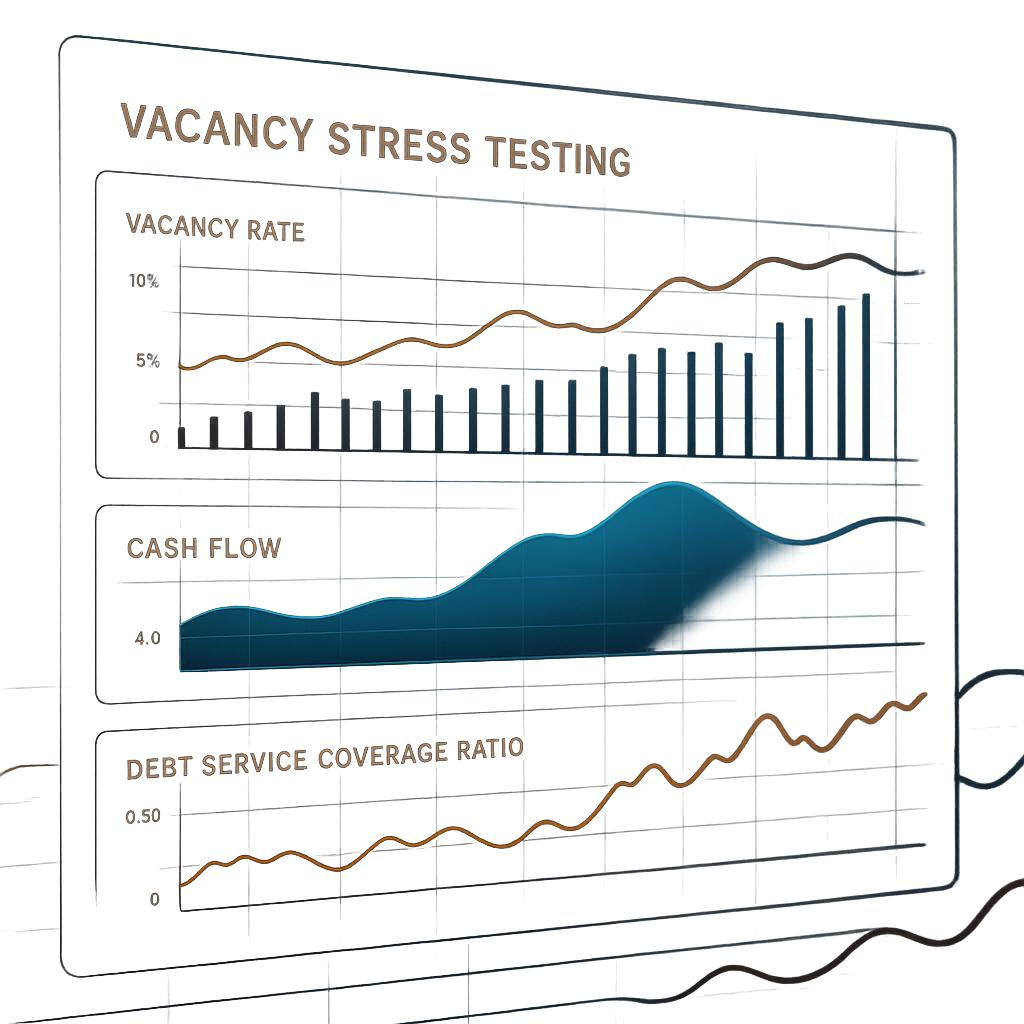
Simply put, vacancy stress-testing means running scenarios where your property has higher-than-expected vacancy. The goal is to see how much lost rent your rental can handle before it stops being profitable or falls below lender requirements, such as debt service coverage ratio (DSCR).
However, this is not guesswork. It is a practical rental property vacancy analysis that helps define your risk tolerance and guide your buying, pricing, and financing choices. For a broader framework, start with our guide on how to analyze a Texas Panhandle rental.
The Real-World Approach to Stress-Testing Vacancies
Here’s a step-by-step breakdown you can apply right now using a spreadsheet or your existing property financials.
1. Start with the Base Case
- Calculate your potential gross rent assuming 100% occupancy.
- Estimate your typical vacancy rate based on Amarillo or Texas Panhandle market data. Well-managed long-term rentals often underwrite around 5%–8%, but your number should match the property and submarket.
- Total your operating expenses: taxes, insurance, maintenance, management fees, utilities, and reserves.
- Calculate your Net Operating Income (NOI) = Effective Gross Income, or Potential Rent minus Vacancy Loss, minus Operating Expenses.
- Factor in your annual debt service, including mortgage payments.
- Then identify key metrics: cash flow, DSCR, and cash-on-cash return.
In addition, compare your rent assumptions with real market trends. Our guide to analyzing rent growth can help you avoid rosy projections that only work on paper.
2. Define Vacancy Stress Scenarios
Test vacancy rates beyond your base assumption. This shows how your numbers hold up when leasing takes longer than expected.
- Mild stress: vacancy rises 5 percentage points, such as 5% to 10%.
- Moderate stress: vacancy rises 10 percentage points.
- Severe stress: vacancy rises 15–25 percentage points. In higher-risk cases, test up to 20%–30%.
For each vacancy stress test rental scenario, update your Effective Gross Income. Then recalculate NOI, cash flow, DSCR, and return metrics.
3. Identify Breakpoints
Run these stress cases until you hit critical thresholds.
- Cash flow drops to zero or goes negative. That means the property cannot cover expenses and debt service from rent alone.
- DSCR falls below your lender’s required minimum, often 1.20x or 1.25x. Talk with your lender about the exact requirement.
- Your expected cash-on-cash return or overall ROI falls below your investment target.
As a result, these breakpoints show your maximum sustainable vacancy before the deal starts to wobble.
4. Use Stress-Test Results to Adjust Investment Decisions
Understanding your rental’s vacancy tolerance helps you make better choices before you close.
- Negotiate purchase price discounts for higher risk, which can improve your NOI margin.
- Choose loan terms and leverage levels that give you breathing room during vacancies.
- Set realistic rent pricing and reserve policies.
Meanwhile, do not ignore other line items. Insurance can change the whole deal, so review our insurance cost guide before you lock in your assumptions.

5. Ground Your Stress Test in Amarillo Market Realities
Check historic and current Amarillo rental vacancy rates before you pick your stress levels. You can review local housing and population data through the U.S. Census Bureau, then compare that with local leasing activity and property-level history.
However, citywide data is only a starting point. A clean rental in a strong pocket of Amarillo may lease faster than a tired property with poor pricing, weak marketing, or deferred repairs. Properties in challenging submarkets may need more conservative assumptions.
6. Consider Combined Stress Factors
For a more conservative analysis, combine vacancy stress with other negative factors.
- Rent reductions of 5%–10% due to market pressure.
- Rising expenses, such as taxes, insurance, or repairs, of 10%–15%.
- Interest rate changes at refinance. Review this with your lender before making financing decisions.
In short, this “worst-case combo” gives you a clearer view of investment property vacancy risk. It also helps you decide whether the return is worth the headache.
Common Mistakes to Avoid
Don’t rely only on optimistic vacancy assumptions. Also, do not ignore lender requirements, reserve needs, or repairs that may delay move-in.
Underestimating vacancy risk can create cash flow problems and force bad decisions. Instead, compare your expected return with local pricing and cap rate trends. Our look at the Amarillo rental cap rate can help you sanity-check the deal.
Conclusion: Protect Your Investment with Realistic Vacancy Stress-Testing
Vacancies happen. Still, their impact depends on whether you ran the numbers before they showed up.
By testing vacancy scenarios, you put yourself in a stronger position to handle downturns, negotiate better deals, and manage risk. If you want a personalized vacancy review for your Amarillo rental property, or you want to discuss how good property management helps reduce vacancy, reach out to Blaze Real Estate. We bring local operating insight from managing rentals across the Panhandle, helping you protect and grow your investment with confidence.

FAQ: Vacancy Stress Tests for Rental Investors
What vacancy rate should I use for an Amarillo rental?
Start with current local data, then adjust for the property, neighborhood, condition, and rent price. Many investors test a base case plus higher vacancy scenarios, such as 10%, 15%, and 20%.
How often should I update my vacancy analysis?
Update it before you buy, before refinancing, and at least once a year. Also update it when rents, insurance, taxes, or repair costs change in a meaningful way.
What is a good DSCR after vacancy stress?
Many lenders look for DSCR around 1.20x to 1.25x, but requirements vary. Talk with your lender and test whether the property still works below your expected occupancy.
Can property management reduce vacancy risk?
Yes, strong pricing, screening, maintenance, marketing, and renewal systems can reduce downtime. However, no manager can remove vacancy risk completely.
Should I include repair downtime in my vacancy estimate?
Yes. Include expected make-ready time between tenants, especially for older rentals. A rental that is vacant for repairs still produces no rent.
Disclaimer: This article provides operational insights and is not legal, lending, tax, or financial advice. Always consult qualified professionals for investment and legal decisions.