
How Should Texas Residential Investors Think About Insurance Costs?
Texas residential investors should treat insurance as a core investment expense, not a small line item. Insurance costs affect cash flow, risk, loan decisions, reserves, and long-term return. In the Texas Panhandle, wind, hail, roof age, and replacement cost can change the numbers fast.
If you own or plan to buy rental property in Amarillo or the Texas Panhandle, insurance needs to be part of the deal analysis from the beginning. A property can look profitable until the real insurance quote shows up. Then the cash flow gets a haircut.
This guide explains what landlord insurance may cover, what drives insurance costs, what mistakes investors should avoid, and how to build insurance into your rental analysis before you buy.
Before making an offer, run the property through the Blaze Rental Deal Analyzer with a real insurance quote or a conservative estimate. Do not let a guessed premium make a weak deal look strong.

What Does Landlord Insurance Usually Cover?
Landlord insurance is designed for rental property risk. It is different from a standard owner-occupied homeowners policy because the property is being rented to someone else.
A landlord policy may include coverage for the dwelling, certain other structures, liability, and loss of rental income if the property becomes uninhabitable because of a covered loss. Coverage depends on the policy, endorsements, exclusions, deductibles, and carrier.
The Insurance Information Institute explains that landlord policies commonly include property coverage for damage to the structure from covered perils such as fire, lightning, wind, hail, ice, or snow, and may also include liability coverage if a tenant or guest is injured on the property. Review the Insurance Information Institute’s overview of rental property coverage.
Do not assume your normal homeowners policy is enough once the home becomes a rental. The Texas Department of Insurance warns that most homeowners insurance will not cover damage to a rental property or may limit what it pays, and it recommends asking your agent about landlord insurance. Review TDI’s guidance on renting out your home.
Why Are Insurance Costs So Important for Rental Property Cash Flow?
Insurance costs matter because they come directly out of rental income. If insurance rises faster than rent, cash flow shrinks. If the deductible is high, the owner may still pay a large amount out of pocket after a claim.
This is why investors should include insurance when they analyze a rental property. A rental should be tested with realistic taxes, realistic insurance, repairs, vacancy, management, and reserves. Otherwise, the deal is not being analyzed. It is being flattered.
For example, a $75 monthly insurance difference may not sound huge. But that is $900 per year. On a rental with thin cash flow, that can be the difference between a decent hold and a property that only works when nothing goes wrong.
If you are still learning the full rental math, read Blaze’s guide on how to analyze a rental property in the Texas Panhandle.
What Weather Risks Affect Insurance in the Texas Panhandle?
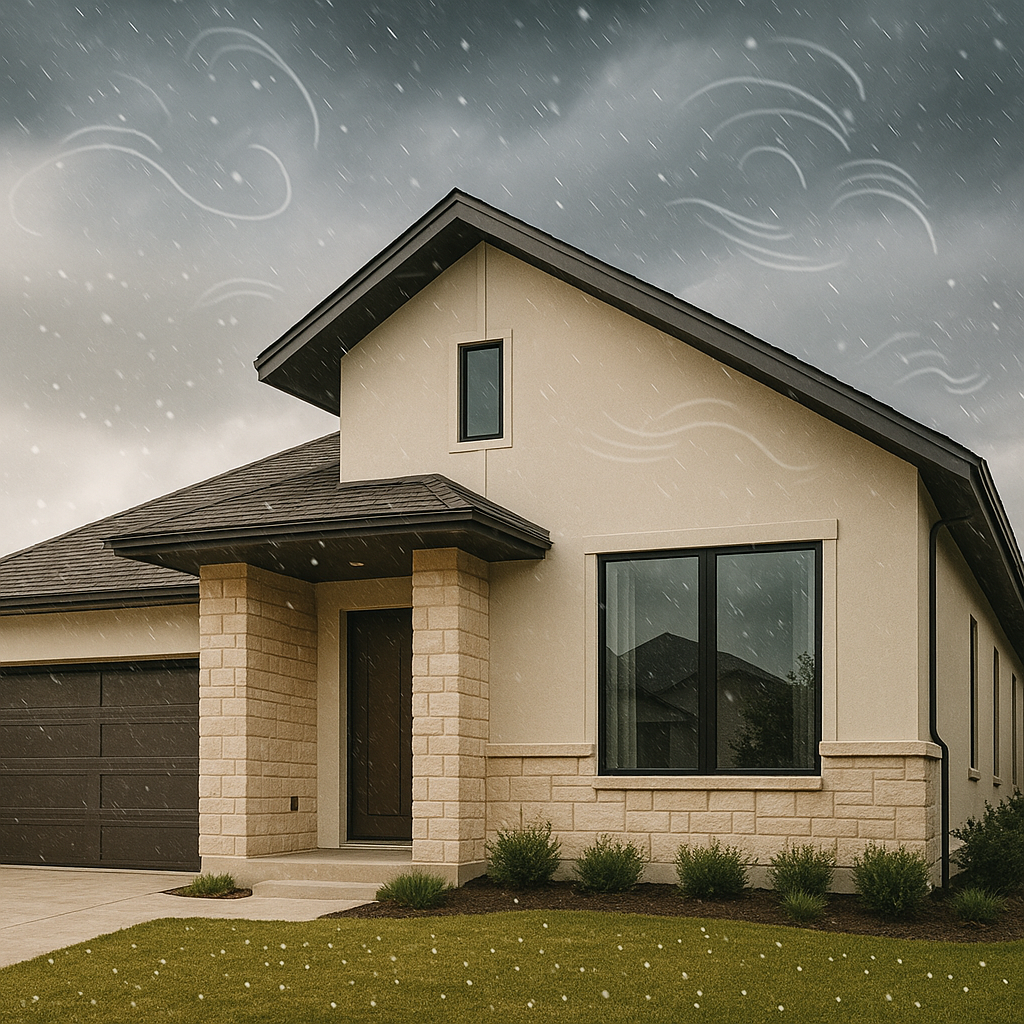
Weather risk is one of the biggest reasons insurance needs special attention in Amarillo and the Texas Panhandle. Wind, hail, severe thunderstorms, freezing conditions, and roof exposure can all affect premiums, deductibles, underwriting, and claim risk.
The National Weather Service Amarillo climate narrative notes that much of Amarillo’s average precipitation falls from April through September, generally with thunderstorm activity. It also notes that warm-season severe storms can bring large hail, lightning, and damaging wind, especially in spring. Review the National Weather Service Amarillo climate narrative.
Investors should not treat hail as a rare footnote. Roof condition, roof age, prior claims, and wind/hail deductibles can all affect whether a property is easy to insure and how much risk the owner keeps after a storm.
A cheap rental with a worn roof may not be cheap after the insurance quote, inspection report, and repair bids show up. That is the real estate version of “surprise, it was expensive the whole time.”
What Factors Drive Landlord Insurance Costs?
Landlord insurance costs are driven by risk. The carrier is looking at how much the property may cost to repair or rebuild, how likely a claim may be, and what coverage the owner is asking for.
The biggest factors include replacement cost, property age, roof age, location, construction type, claims history, occupancy, property condition, coverage limits, deductibles, and optional endorsements.
Replacement cost is especially important. Insurance is usually not based on what you paid for the property. It is based on what it may cost to repair or rebuild covered property. A home with a modest market value can still carry a higher insurance cost if rebuilding costs are high.
Older rental homes may also cost more to insure. Aging roofs, outdated electrical, older plumbing, foundation issues, poor maintenance, or prior damage can all affect underwriting.
This is why investors should get insurance quotes before closing, not after. Finding out the real premium after purchase is a rookie mistake with professional consequences.
How Do Deductibles Change the Real Cost of Insurance?
Premium is only one part of the insurance cost. The deductible matters too. A lower premium with a much higher deductible may save cash monthly but leave the owner with more out-of-pocket risk when a claim happens.
Texas investors need to pay close attention to wind and hail deductibles. TDI notes that deductibles for wind and hail damage are usually different than deductibles for other types of damage. Review TDI’s insurance tips discussing wind and hail deductibles.
TDI also gives a simple example showing how deductibles reduce what an insurer pays after a loss. If a hailstorm destroys a roof and the repair cost is $6,500, a $500 deductible means the policy pays $6,000 under that example. Review TDI’s deductible guidance.
Investors should ask the agent to explain the deductible structure clearly. Is it a flat dollar amount? A percentage? Different for wind and hail? Different for named storms? If you do not know, you do not know your real risk.
What Is the Difference Between Homeowners Insurance and Landlord Insurance?
Homeowners insurance is usually written for an owner-occupied home. Landlord insurance is written for a rental property. That difference matters.
A rental property has different risks. Tenants occupy the home. The owner may not see the property daily. Repairs may be reported through a tenant. The owner may need loss-of-rent coverage if a covered loss makes the home uninhabitable.
If you move out of a house and turn it into a rental, call your insurance agent before the tenant moves in. Do not assume the old policy still fits. A claim is a terrible time to discover your coverage was built for the wrong use.
Should Investors Require Renters Insurance?
Many landlords require tenants to carry renters insurance, but the lease and process should be handled correctly. Renters insurance is for the tenant’s personal property and may include tenant liability coverage, depending on the policy.
TDI notes that renters insurance is not required by law, but some landlords may require tenants to have a renters policy. Review TDI’s renters insurance guidance.
Requiring renters insurance does not replace landlord insurance. It is a separate layer. The landlord still needs proper coverage for the rental property.
How Should Insurance Be Used in Rental Property Analysis?
Insurance should be entered as a real operating expense when you analyze a rental property. Do not use a random number from another property unless the homes are truly similar.
Run the deal with the current quote. Then stress-test the deal with a higher premium, a larger deductible, or a major repair reserve. If the property only works with a low insurance estimate, the deal may be too thin.
Use the Blaze Rental Deal Analyzer to test insurance costs alongside rent, taxes, repairs, financing, vacancy, and management.
This is also where investors should compare insurance cost to rent growth. A rent increase does not help much if insurance and taxes rise faster than income. For a deeper look, read Blaze’s guide on analyzing rent growth for Amarillo investors.
How Can Investors Manage Insurance Costs?
Investors cannot control the weather, but they can control a lot of the risk profile. A well-maintained property is usually easier to insure than a neglected one.
Start with roof condition. In the Texas Panhandle, roof age and hail history matter. Keep records for roof repairs, replacements, inspections, and claims. If the roof is near the end of its useful life, price that into the deal.
Next, maintain plumbing, electrical, HVAC, drainage, locks, smoke alarms, and exterior conditions. Small maintenance issues can become claim issues later.
Investors should also shop coverage periodically, compare deductible options, ask about policy exclusions, and review coverage limits as replacement costs change.
Do not cut coverage blindly to save premium. That is not strategy. That is walking into a hailstorm with a paper umbrella.
What Should Investors Do After Hail or Wind Damage?
After hail or wind damage, investors should document the damage, prevent further damage when safe, contact the insurance company promptly, and keep records of repairs and communication.
TDI advises filing an insurance claim as soon as you can if hail or strong winds damage your home or car. Review TDI’s hail and windstorm claim tips.
For rental properties, communication with tenants also matters. If the property is damaged, the owner or manager needs to coordinate access, repairs, safety issues, and documentation.
This is one reason property management systems matter. A good maintenance and documentation process can reduce confusion during a claim.

What Insurance Mistakes Should Rental Investors Avoid?
The first mistake is using a homeowners policy when the property is really a rental. The second is guessing the premium instead of getting a quote before buying.
Another mistake is ignoring deductibles. A policy can look affordable until the owner realizes the wind or hail deductible leaves them with a large out-of-pocket bill.
Investors also get into trouble when they underinsure the property, skip loss-of-rent coverage without understanding the risk, fail to require renters insurance when appropriate, or forget to update coverage after improvements.
The last mistake is treating insurance as separate from investment analysis. It is not separate. Insurance affects cash flow, reserves, and risk. It belongs in the numbers from day one.
How Can Property Management Help Reduce Insurance Risk?
Property management cannot control insurance premiums, but good management can reduce operational risk. Regular inspections, maintenance tracking, tenant communication, documentation, and fast repair coordination all help protect the property.
A manager can also help owners spot problems before they become bigger claims. Roof concerns, water leaks, tenant-caused damage, drainage issues, and deferred maintenance should not sit unnoticed.
Blaze Real Estate provides property management services in Amarillo and the Texas Panhandle for owners who want their rentals managed with systems, documentation, and local operator judgment.
If you are new to rental ownership, read the New Landlord Guide for the Texas Panhandle. Insurance is only one part of the larger rental operation.
How Should Investors Budget for Insurance Long Term?
Investors should assume insurance costs may change over time. Premiums can rise because of market conditions, claims history, replacement costs, roof age, coverage changes, or carrier decisions.
Build a reserve. Review policies annually. Update replacement cost assumptions. Watch deductible changes. Ask the agent what claims are covered, what is excluded, and what would happen if the property were vacant after a covered loss.
If you are buying more than one rental, compare insurance across the portfolio. One property with a high-risk roof or weak condition can drag down returns faster than expected.
A resilient rental portfolio is not built on the cheapest premium. It is built on smart coverage, good reserves, and properties that can survive real-world ownership.
What Is the Bottom Line on Insurance Costs for Texas Investors?
Insurance costs are a major part of Texas residential investing. In the Texas Panhandle, wind, hail, roof age, deductibles, and replacement cost can all affect your return.
Do not treat insurance as an afterthought. Get quotes early. Understand deductibles. Compare coverage. Build reserves. Then run the property through a rental analysis with insurance included.
If the property still works with realistic insurance, taxes, repairs, vacancy, and management, it may be worth a closer look. If it only works with guessed numbers, it is not ready.
Blaze Real Estate helps rental owners and investors evaluate properties through an operator’s lens: rent potential, management fit, maintenance risk, insurance exposure, vacancy, and cash flow.
Frequently Asked Questions About Rental Property Insurance Costs
What is landlord insurance?
Landlord insurance is insurance designed for rental properties. It may cover the dwelling, certain other structures, liability, and loss of rental income after a covered loss, depending on the policy.
Is landlord insurance different from homeowners insurance?
Yes. Homeowners insurance is usually written for an owner-occupied home. Landlord insurance is designed for rental property risk. If a home becomes a rental, the owner should speak with an insurance agent before relying on the old homeowners policy.
Why is insurance important for rental property cash flow?
Insurance is an operating expense. Higher premiums or deductibles can reduce cash flow and increase risk. Investors should include insurance when analyzing rent, expenses, vacancy, financing, and returns.
What drives landlord insurance costs in Texas?
Landlord insurance costs can be affected by replacement cost, property age, roof age, location, claims history, condition, construction type, coverage limits, deductibles, and optional endorsements.
Why do wind and hail deductibles matter in the Texas Panhandle?
Wind and hail deductibles matter because they may be different from other deductibles and can leave the owner with a larger out-of-pocket cost after a storm. Investors should ask their agent to explain the deductible structure before buying.
Should landlords require renters insurance?
Many landlords require renters insurance, but it should be handled through the lease and screening process. Renters insurance does not replace landlord insurance. It is separate coverage for the tenant’s personal property and possible tenant liability, depending on the policy.
How can investors reduce insurance risk?
Investors can reduce insurance risk by maintaining the property, tracking roof condition, repairing issues promptly, documenting maintenance, reviewing coverage annually, comparing deductibles, and keeping reserves for unexpected claims or repairs.
Where should I include insurance in a rental property analysis?
Insurance should be included as an operating expense when analyzing a rental property. Use a real quote whenever possible, then stress-test the deal with higher premiums or deductibles to see whether the property still works.