
Amarillo investors love a clean rule of thumb. The problem is, Amarillo rental cap rate is not a shortcut—it is a snapshot. And in the Texas Panhandle, that snapshot can get blurry fast when insurance, property taxes, repairs, and vacancy start moving.
So what cap rate should you expect in Amarillo in 2026?
Here’s the practical answer we see in real underwriting: most investors use a wide screening band (often roughly 6%–10%), then tighten expectations based on property type, location, and how “real” the NOI is. For small multifamily, public-facing benchmarks and underwriting assumptions commonly land around the high-7% to 8%+ range. (We’ll explain why that’s not the same thing as “good” or “bad.”)
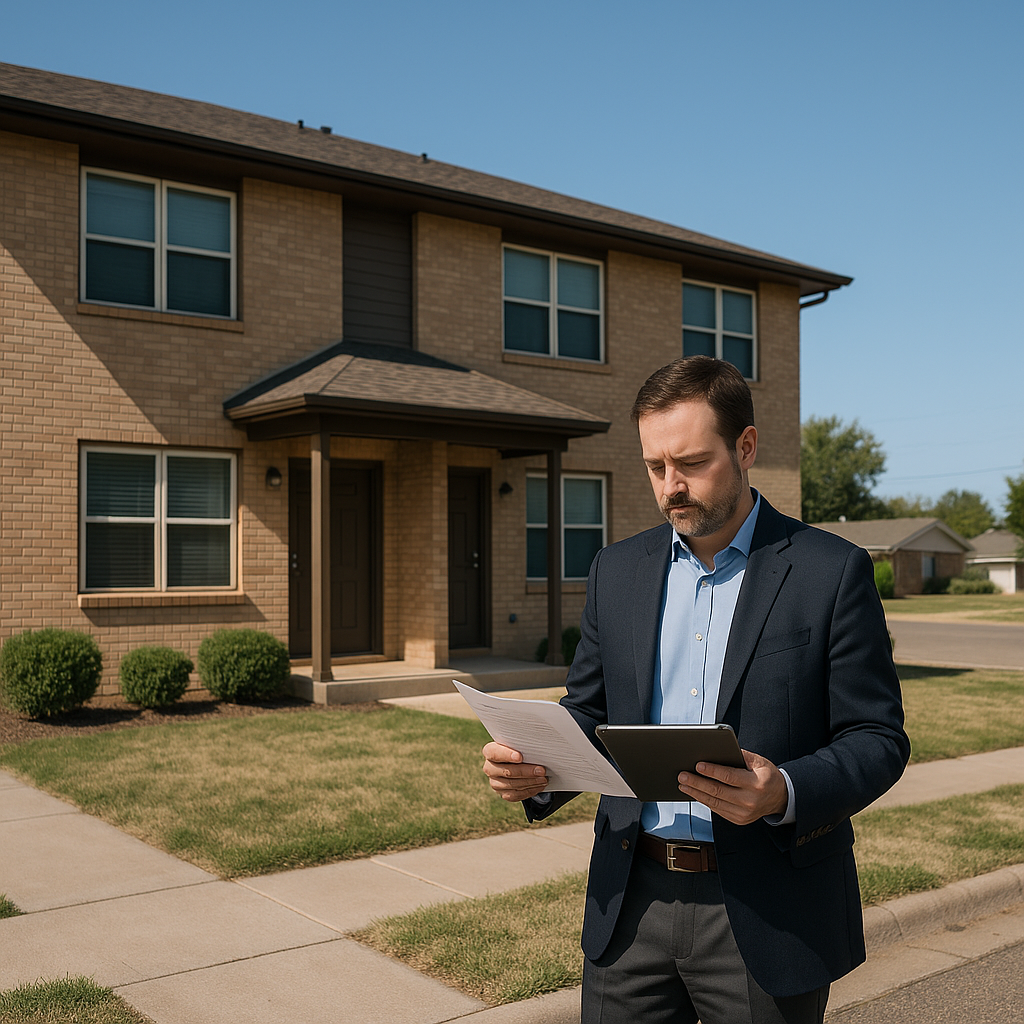
Cap rate in Amarillo (2026): what you’re really asking
When an investor searches “what cap rate should I expect in Amarillo,” they’re usually trying to answer one of these:
- Am I overpaying for this rental?
- Is this deal priced like a Dallas asset… even though it’s in the Panhandle?
- What’s a reasonable unlevered return if rents flatten and costs keep climbing?
Cap rate can help—but only if you treat it like a quick diagnostic, not the full physical.
Amarillo cap rate benchmarks for 2026 (practical ranges)
Let’s separate the benchmark conversation from the deal underwriting conversation.
Small multifamily: often underwritten around high-7% to 8%+
For Amarillo and similar secondary Texas markets, multifamily cap rates are commonly discussed in the upper-7s to 8s in underwriting. Some market summaries referencing national data pegged Texas multifamily cap rates around 8.1% (Q3 2025), which lines up with what we typically see investors expect in Panhandle-style risk profiles (compared to major metros).
Also, local feasibility underwriting for Amarillo-area residential projects has shown terminal cap assumptions around the mid-to-high 8% range, which is another signal that the market expects a higher yield to compensate for risk and slower liquidity.

Single-family rentals: wider spread, often lower than small multifamily
Single-family cap rates in Amarillo are harder to “benchmark” with a clean public number because scattered-site homes vary wildly by:
- condition (and deferred maintenance)
- tenant quality and turnover history
- whether expenses are being tracked honestly
- neighborhood micro-market
In practice, SFRs often trade at lower cap rates than small multifamily because they’re simpler to finance, easier to sell later, and have a broader buyer pool. But the spread can disappear if the house is older, maintenance-heavy, or sitting in a tougher pocket with higher vacancy.
The honest takeaway: 6%–10% is a screening band, not a promise
If you want a fast “Amarillo 2026” filter, a 6%–10% cap rate band is a reasonable first pass—as long as you normalize the NOI correctly. That range shows up in Panhandle investor conversations because it reflects the reality that Amarillo deals can look attractive on paper, but costs (and downtime) are not theoretical.
If you want the deeper process we use to make cap rate comparisons “real,” start with Analyze a Rental in the Texas Panhandle.
How to calculate cap rate (and what it does not tell you)
Cap rate is simple:
cap rate = net operating income (NOI) ÷ purchase price (or current value)
NOI is the income left after operating expenses—before debt service.
What cap rate does not include
This is where investors get burned:
- your mortgage payment (and whether the deal actually cash flows)
- principal paydown
- tax benefits/depreciation
- future rent growth (or rent declines)
- one-time repairs you’re pretending are “CapEx later”
Cap rate is a speedometer—not the whole dashboard.
The Panhandle factors that move cap rates (and your real returns)
Amarillo isn’t Austin. We don’t underwrite like Austin.
1) Vacancy is a real underwriting line item here
HUD’s Amarillo market analysis estimated rental vacancy around 12.1% (recent reporting), which is elevated. That doesn’t mean your unit will sit empty 12% of the year—but it’s a reminder that Amarillo has real leasing friction in certain price points and property types.
Practical implication: when you see a pro forma with zero vacancy and “tenant pays everything,” treat it like a Facebook Marketplace boat listing.
2) Insurance: hail and wind aren’t “maybe” risks
If you own rentals in Amarillo, Canyon, or anywhere across the Panhandle, you already know the drill:
- hail happens
- wind happens
- roofs and siding are not theoretical expenses
Even when the purchase cap rate looks strong, insurance cost increases (or higher deductibles) can quietly crush NOI—especially on older roofs and properties with prior claims.

3) Texas property taxes can compress NOI fast
Texas is well-known for higher property-tax burdens relative to many states. In underwriting, the common mistake is using the seller’s current tax bill (often capped, exempted, or simply outdated) instead of projecting what taxes look like after a sale and reassessment dynamics.
Cap rate depends on NOI. Taxes change NOI. Therefore, taxes change cap rate—whether you notice or not.
4) Liquidity and buyer pool: Amarillo is smaller, so yield expectations rise
In major metros, you can sell a stabilized rental quickly to another investor, an owner-occupant, or an institutional buyer. In Amarillo, the buyer pool is smaller and more price-sensitive, so the market often demands a bit more yield.
That’s one reason secondary markets tend to trade at higher cap rates than the “headline cap rates” you hear about in big-city commercial talk.
How to underwrite Amarillo cap rates like an operator (not a spreadsheet hero)
If you want cap rate to be useful, do this:
Normalize NOI before you quote any cap rate
That means:
- use market rent (not “what my cousin said it’ll rent for”)
- include realistic vacancy and turnover costs
- include repairs/maintenance and long-term CapEx assumptions
- verify insurance with a real quote
- project taxes conservatively
If you need a systems view of who actually executes all of that after closing, read What a Property Manager Actually Does.
Use cap rate to compare deals—not to make the decision
Cap rate is great for comparing:
- Property A vs Property B
- SFR vs duplex vs fourplex
- stabilized vs value-add
But the decision should come from the full return stack: cash-on-cash, risk, tenant profile, maintenance curve, and how easy the asset is to exit.
If you’re analyzing 2–4 unit properties specifically, this is a solid next step: Evaluate Duplexes, Triplexes & Fourplexes.
Common cap-rate mistakes we see in Amarillo underwriting
Here are the big ones that show up in Panhandle deals:
- believing “NOI” from a rent roll that ignores repairs, turns, and vacancy
- assuming taxes stay flat after purchase
- underestimating insurance costs on older roofs
- confusing “high cap rate” with “good deal” (sometimes high cap rate = high problems)
- ignoring operational reality if you’re self-managing
If you’re debating whether you can run it yourself, compare the real tradeoffs in Pros & Cons of Self-Managing a Texas Rental.
Bottom line: what cap rate should you expect in Amarillo in 2026?
For 2026 underwriting in Amarillo, expect cap rates to generally be higher than major Texas metros, with small multifamily often pricing/underwriting around the high-7% to 8%+ range and a broader 6%–10% screening band showing up in local investor expectations—depending on how clean and stable the NOI really is.
View most recent CBRE Cap Rate Survey Here
If you want, we’ll sanity-check your assumptions (rent, taxes, insurance, vacancy) and help you decide whether the cap rate you’re seeing is real—or just optimistic math.
Book an Investor Strategy Call
Frequently Asked Questions
What is a typical Amarillo rental cap rate for small multifamily properties in 2026?
In Amarillo for 2026, small multifamily properties are commonly underwritten with cap rates in the high-7% to 8%+ range. This reflects the local market’s risk profile and the higher yield expectations compared to major Texas metros.
Why do Amarillo single-family rental cap rates vary more than multifamily rates?
Single-family rental cap rates in Amarillo vary widely due to differences in property condition, tenant quality, neighborhood, and expense tracking. Typically, SFRs trade at lower cap rates than small multifamily because they are easier to finance and sell, but older or maintenance-heavy homes may have higher cap rates due to increased risk.
How do insurance, taxes, and vacancy affect Amarillo rental cap rates?
Insurance costs in Amarillo can be high due to hail and wind risks, property taxes tend to be significant and may increase after purchase, and rental vacancy rates in the area are elevated around 12%. These factors reduce net operating income (NOI), which in turn compresses cap rates and affects the real returns investors can expect.
Can I use cap rate alone to decide if an Amarillo rental is a good investment?
No, cap rate is a useful quick diagnostic for comparing deals but does not capture mortgage costs, tax benefits, future rent changes, or repair expenses. Investors in Amarillo should normalize NOI and consider factors like cash flow, tenant quality, and exit strategy before making investment decisions.
What cap rate range should I use as a screening tool for Amarillo rental properties in 2026?
A reasonable screening band for Amarillo rental cap rates in 2026 is roughly 6% to 10%. This range allows for variations in property type, location, and risk, but it is important to verify that the net operating income used in calculations is normalized and realistic.