
How Should Amarillo Investors Analyze Rent Growth?
Amarillo investors should analyze rent growth by comparing current rent, local rent comps, tenant demand, vacancy risk, property condition, and future operating costs. Rent growth matters because it affects cash flow, property value, and long-term return. But higher rent only helps if the market can support it.
If you own or plan to buy rental property in Amarillo or the Texas Panhandle, rent growth is one of the key numbers to watch. It tells you whether income may rise over time, whether your current rent is behind the market, and whether a potential purchase has room to improve.
The mistake is assuming rent growth is automatic. It is not. Rent depends on local wages, housing supply, tenant demand, property condition, insurance costs, taxes, and how well the property is managed.
Before you buy or raise rent, use the Blaze Rental Deal Analyzer to test rent, expenses, vacancy, financing, and cash flow. Rent growth looks great on paper until the real numbers walk in and ruin the party.
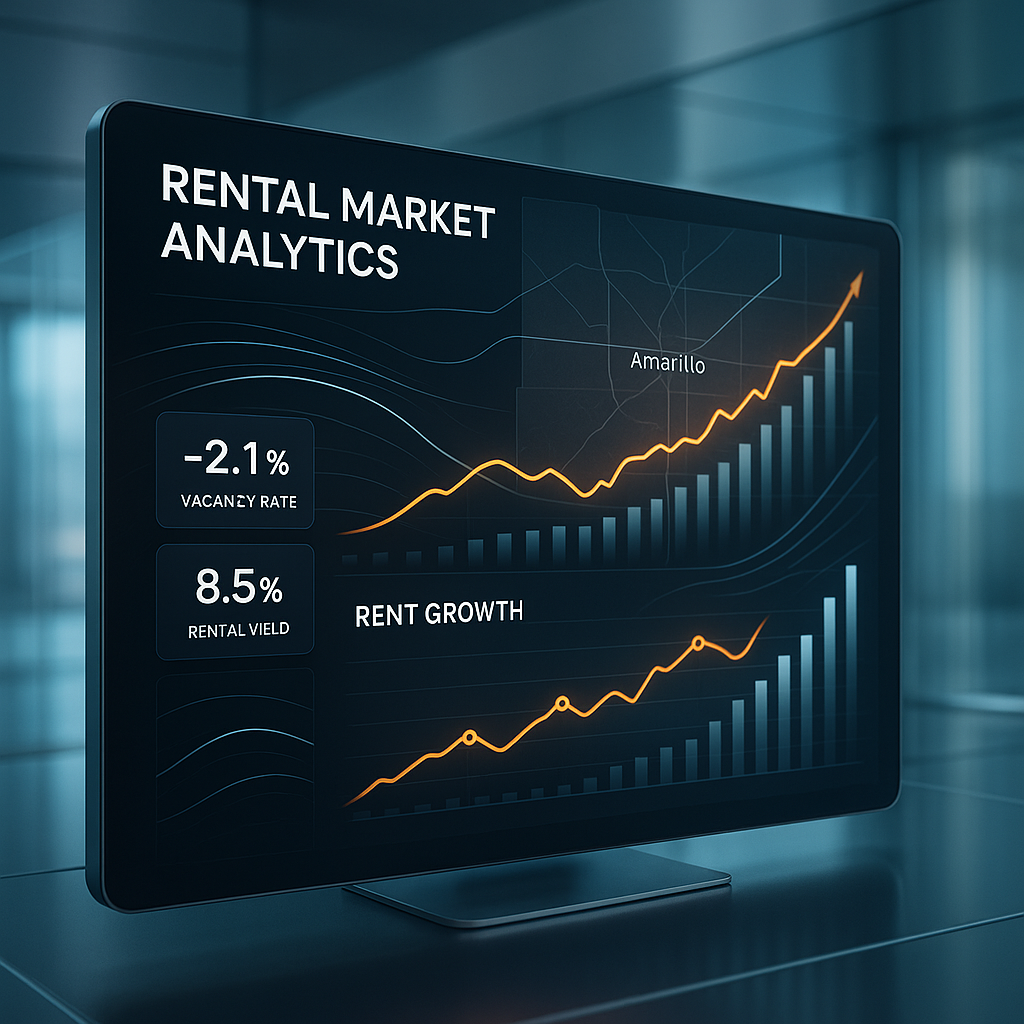
What Is Rent Growth?
Rent growth is the increase in rent over time. It is usually measured as a percentage from one year to the next.
For example, if a rental home rents for $1,000 per month this year and $1,050 per month next year, that is 5% rent growth. That increase may improve cash flow, raise the property’s income value, and help offset rising costs.
But rent growth is only useful when it is real. A landlord can ask for any rent they want. The market decides whether a qualified tenant will pay it.
That is why investors should separate three different numbers: current rent, market rent, and projected rent. Current rent is what the tenant pays today. Market rent is what similar homes are leasing for now. Projected rent is what you think the property may earn later.
Do not mix those up. That is how investors buy a property based on tomorrow’s rent while paying today’s price.
Why Does Rent Growth Matter to Rental Property Investors?
Rent growth matters because rental income drives the investment. If rent rises over time and expenses stay controlled, cash flow can improve. If rent stays flat while taxes, insurance, repairs, and labor costs rise, the property can get tighter every year.
Rent growth also affects value. Income-producing property is often judged by the income it can produce. Stronger rent can improve the property’s return, especially when the increase is supported by real demand and not just wishful thinking.
This is where investors need to be careful. A property with low current rent may have upside if it is underpriced. But that upside must be verified. Sometimes rent is low because the owner is behind the market. Other times rent is low because the property is tired, awkward, poorly located, or difficult to lease.
Rent growth is not magic. It has to be earned by the market, the property, and the management.
What Local Rent Data Should Amarillo Investors Watch?
Investors should use more than one data source when studying rent growth. A single listing site can be useful, but it should not be the whole analysis.
For broad context, the U.S. Census Bureau lists Amarillo’s 2020–2024 median gross rent at $1,092. HUD’s FY2026 Fair Market Rent data for the Amarillo area provides another benchmark by bedroom count. These are not exact rent targets for a specific house, but they help investors stay grounded.
You can review Census QuickFacts for Amarillo and HUD’s Fair Market Rent data for official rental context.
Then compare that broad data against active listings, recently leased homes, property condition, and neighborhood-level demand. A three-bedroom home in one Amarillo pocket may not rent like a similar-sized home across town. Rent growth is local, and sometimes it is very local.
How Do You Compare Rent Growth by Neighborhood?
To compare rent growth by neighborhood, look at similar properties in the same area over time. Focus on bedroom count, bathroom count, square footage, condition, garage or parking, yard, pet policy, and updates.
Amarillo has submarkets that can behave differently. Bivins, City View, Wolflin, The Colonies, Tradewind, San Jacinto, and surrounding Panhandle towns can attract different tenants and different price points.
Do not assume one Amarillo rent trend applies to every property. A clean, updated home near strong demand may support rent growth. A dated home with poor layout or deferred maintenance may not.
The best rental market analysis compares your property to the homes a tenant would actually choose instead. If those homes are cleaner, newer, or better located, your rent growth may be limited unless you improve the property or adjust expectations.
How Does Property Condition Affect Rent Growth?
Property condition has a direct effect on rent growth. Tenants may pay more for a home that feels clean, safe, updated, and easy to live in. They usually resist higher rent when the property feels neglected.
Rent growth is not just a market trend. It is also an owner decision. Repairs, paint, flooring, HVAC performance, curb appeal, appliances, lighting, locks, and cleanliness all affect what tenants are willing to pay.
That does not mean every rental needs luxury finishes. Over-improving a rental can waste money. The goal is to make improvements that support rent, reduce vacancy, improve retention, or reduce future maintenance.
If the rent increase depends on repairs or upgrades, include those costs in the analysis. A $100 monthly rent bump sounds great until it takes $8,000 in improvements to get it.

How Do Local Jobs and Population Trends Affect Rent Growth?
Rent growth depends on tenant demand. Tenant demand depends on people having jobs, income, and reasons to live in the area.
Amarillo’s economy includes healthcare, education, logistics, agriculture, energy, manufacturing, retail, and regional services. When employment is stable and people are moving within or into the area, rental demand can stay healthy. When local employment weakens or household budgets tighten, rent growth can slow.
Investors can review the BLS Amarillo Economy at a Glance for employment and unemployment context. For housing activity, the Texas Real Estate Research Center provides market data that can help investors watch broader sales and housing trends.
Rent growth does not require a booming economy, but it does need enough tenant demand to support higher rent without creating longer vacancy.
What Metrics Help Investors Track Rent Growth?
Investors should track a few simple metrics. Do not make this harder than it needs to be.
First, track current rent versus market rent. This shows whether a property may be under-rented, fairly priced, or already near the top of the market.
Second, track vacancy and days on market. If similar homes are sitting longer, rent growth may be weak even if asking rents look higher online.
Third, track renewal rate. If tenants are renewing after rent increases, the market may support the increase. If good tenants leave after every increase, the strategy may be too aggressive.
Fourth, track rent-to-value. This helps investors compare income to property price. A property may appreciate in value while rent fails to keep up. That can reduce cash flow and make the deal less attractive as a rental.
Finally, track operating costs. Rent growth means less if insurance, taxes, repairs, and management costs are rising faster than rent.
How Should Rent Growth Be Used Before Buying a Rental Property?
Rent growth should be treated as upside, not the foundation of the deal. A rental property should make sense under today’s rent before an investor gives too much credit to future increases.
When you analyze a rental property, run the numbers with current market rent first. Then test a modest rent-growth scenario. Then test a flat-rent scenario. If the property only works with aggressive rent growth, the deal is probably too thin.
This is exactly where the Blaze Rental Deal Analyzer should be used. Run the property with today’s rent, then test what happens if rent grows slowly, vacancy increases, insurance rises, or repairs come in higher than expected.
A good investment should not need perfect rent growth to survive. Good deals have margin. Bad deals need a motivational speech.
How Does Rent Growth Affect Cash Flow?
Rent growth can improve cash flow if expenses are controlled. For example, a $100 monthly rent increase adds $1,200 per year in gross income. That can help offset taxes, insurance, repairs, or higher debt costs.
But the increase is not pure profit if it causes turnover. If a tenant leaves because of a rent increase, the owner may face vacancy, cleaning, repairs, marketing, leasing costs, and new tenant risk.
That is why rent growth should be balanced against tenant retention. Sometimes a smaller increase with a good tenant is better than pushing to the top of the market and losing a month of rent.
For more on that tradeoff, read Blaze’s guide on reducing vacancy in rental properties.
How Do Taxes and Insurance Change the Rent Growth Picture?
Rent growth needs to be compared against expense growth. If rent rises 3% but insurance and taxes rise faster, the owner may not be gaining much ground.
This matters in the Texas Panhandle because insurance can be affected by wind, hail, roof age, deductibles, claim history, and carrier appetite. Property taxes can also change over time due to appraisal values, exemptions, and local tax rates.
Investors should review insurance quotes and tax assumptions before buying. A property with decent rent growth can still become a weak deal if ownership costs rise faster than income.
The rent number is only one side of the story. The expense side gets a vote too, and it is usually not shy.
When Should Landlords Raise Rent?
Landlords should consider raising rent when market data supports the increase, the lease allows it, the timing is proper, and the tenant relationship can support the change. Rent increases should be planned, not emotional.
Good timing often starts before renewal. Review rent comps, tenant history, maintenance needs, and vacancy risk. A reliable tenant who pays on time and takes care of the property has value. Do not ignore that value just because the market says you might squeeze out a little more.
A rent increase should be clear, documented, and tied to the renewal process. Avoid random midstream surprises unless the lease and law allow it. Texas landlords should always follow the lease and current legal requirements.
If rent has fallen far behind the market, a larger correction may be needed. But that should still be handled with a plan. Big jumps can trigger turnover.
What Are Common Rent Growth Mistakes?
The first mistake is using national rent data as if it proves what will happen in Amarillo. National trends can give context, but they do not price your specific rental.
The second mistake is relying on stale comps. Old rent numbers may not reflect current competition, seasonality, or property condition.
The third mistake is assuming upgrades automatically justify higher rent. Some upgrades help. Others just make the owner feel better.
The fourth mistake is ignoring vacancy. A higher rent does not help if the home sits empty too long.
The fifth mistake is failing to compare rent growth to expense growth. If costs are rising faster than rent, cash flow may still be shrinking.
How Can Property Management Support Rent Growth?
Good property management can support rent growth by pricing correctly, reducing vacancy, screening tenants well, handling maintenance, improving retention, and keeping the property positioned against the market.
Rent growth is not just a pricing decision. It is an operations decision. A well-maintained property with good communication and fast repair handling is easier to renew and easier to lease.
Blaze Real Estate provides property management services in Amarillo and the Texas Panhandle for owners who want rent decisions based on data, tenant behavior, and real market activity instead of guesswork.
If you are new to rental ownership, start with our New Landlord Guide for the Texas Panhandle. If you are buying, review how to analyze a rental property before you write the offer.

How Can Blaze Help Investors Monitor Rent Growth?
Blaze helps investors look at rent growth the way operators should: by comparing market rent, tenant demand, property condition, vacancy risk, renewal timing, and expenses.
We do not look at rent in isolation. We look at the whole property. That includes pricing, maintenance, tenant quality, turnover cost, tax pressure, insurance, and long-term ownership goals.
If you are deciding whether to buy, hold, raise rent, renovate, or reposition a rental, start with the Rental Deal Analyzer. Then schedule an investor consultation so we can talk through the real assumptions behind the numbers.
What Is the Bottom Line on Rent Growth?
Rent growth matters, but it should not be treated like a guarantee. Amarillo rental investors need to track local rent comps, vacancy, tenant demand, property condition, and expense growth before making decisions.
A smart rent strategy protects cash flow without creating avoidable turnover. The goal is not to charge the highest rent imaginable. The goal is to earn the strongest sustainable return.
In the Texas Panhandle, rent growth rewards owners who operate well. Good pricing, good maintenance, good screening, and good renewal timing all matter.
If you want to understand how rent growth affects your rental portfolio, Blaze Real Estate can help you review the numbers and build a plan that fits the market.
Frequently Asked Questions About Rent Growth
What is rent growth?
Rent growth is the increase in rent over time. It is usually measured as a yearly percentage. For example, if rent rises from $1,000 per month to $1,050 per month, that is 5% rent growth.
Why does rent growth matter for rental property investors?
Rent growth matters because it can improve cash flow, help offset rising expenses, and support long-term property value. But rent growth only helps when the market supports the increase and the property stays occupied.
How do I know if my rental is below market rent?
Compare your rental to similar active and recently leased properties in the same area. Look at bedroom count, condition, location, parking, updates, pet policy, and days on market. If similar homes are renting for more and leasing quickly, your rent may be below market.
Should I raise rent every year?
Not automatically. A rent increase should be based on market data, lease timing, tenant quality, property condition, and vacancy risk. Sometimes a smaller increase with a reliable tenant is better than pushing too hard and creating turnover.
Can rent growth make a weak rental deal work?
Rent growth can improve a deal over time, but it should not be the only reason the investment works. A rental property should be analyzed using current rent first. Future rent growth should be treated as upside, not the foundation.
What data should Amarillo investors use to study rent growth?
Amarillo investors should review local rent comps, active listings, vacancy trends, days on market, Census rental data, HUD Fair Market Rent data, employment trends, and property-specific condition. No single source tells the whole story.
How does vacancy affect rent growth?
Vacancy can erase the benefit of a rent increase. If a higher rent causes a good tenant to move or a property to sit empty, the owner may lose more from vacancy than they gain from the increase.
Where can I test rent growth before buying a rental property?
You can use the Blaze Rental Deal Analyzer to test rent, expenses, financing, vacancy, and cash flow before buying a rental property. This helps show whether the deal works with current rent and whether future rent growth would improve the return.