
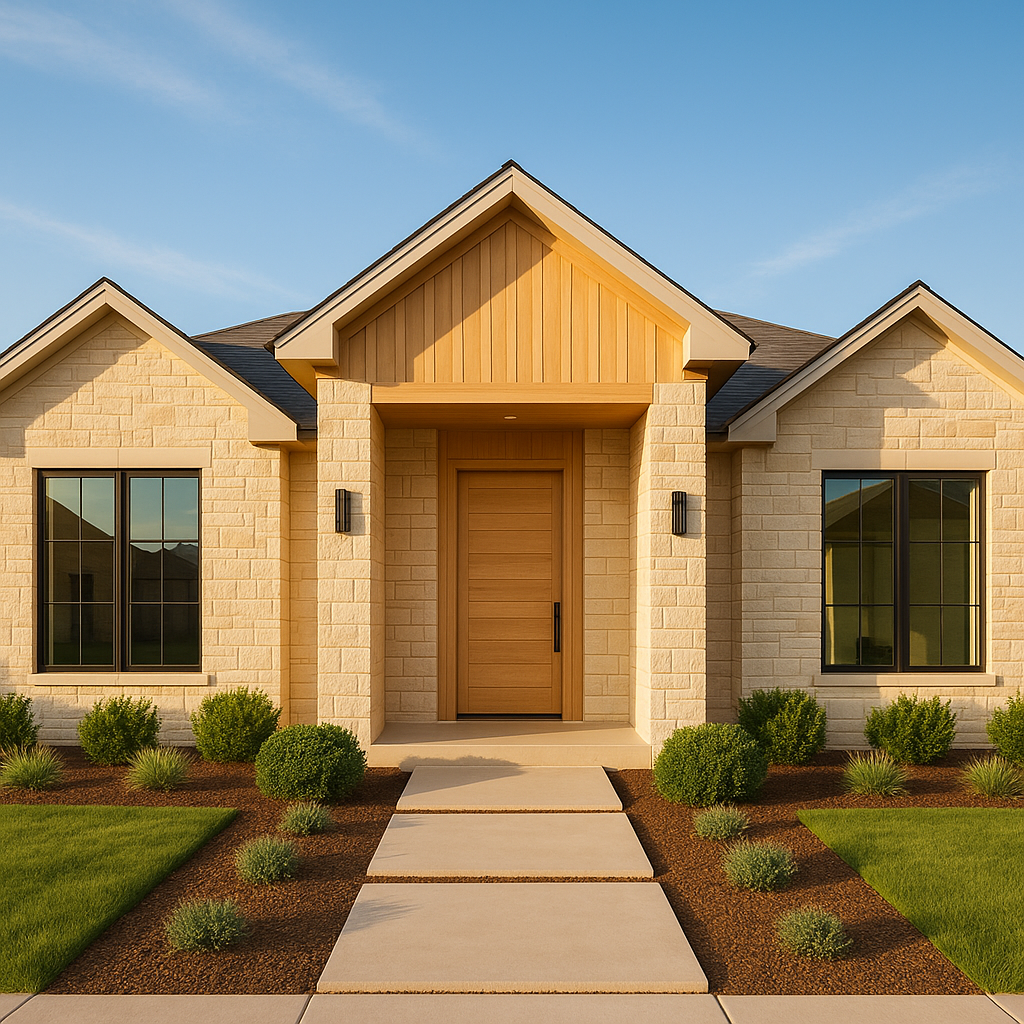
An online home value estimate is tempting because it’s instant. You type in an address, get a number, and it feels like you’ve learned something important.
In practice, that number can create confusion. That’s especially true for home buyers in Amarillo and the Texas Panhandle. Two houses can look similar online but live in completely different “value realities” once you factor in condition, updates, location quirks, and what buyers are actually paying right now.
This article breaks down why online estimates can be wrong, what those tools are actually doing, and how to use them without getting steered into a bad offer or unrealistic expectations. If you are early in the search, start with what to know before touring homes so your value check matches how the local market works.
What an online home value estimate really is
An online home value estimate is usually an automated valuation model, or AVM. It is an algorithm that pulls from public records and recent sales. Then it makes an educated guess based on patterns.
AVMs can be useful for a quick, rough snapshot. But they are not walking the property. They are not noticing repair issues. They are not weighing the same details a real buyer, a real agent, or a real appraiser will.
Why online estimates miss the mark, especially here
In the Panhandle, small differences matter. The algorithm tends to flatten those differences because it has to generalize. That is one of the biggest automated valuation model limits.
They don’t “see” condition the way buyers do
Condition is a huge value driver. It is also one of the hardest things for an algorithm to measure.
A home with a tired roof, foundation movement, old HVAC, or heavy pet damage can look identical online to a well-maintained home with the same bed count, bath count, and square footage. Buyers do not price those homes the same. Lenders and appraisers usually do not either.
Public records can be incomplete or outdated
A lot of data that feeds an online estimate comes from county records. Those records are not always updated quickly or accurately.
Remodels, added bathrooms, enclosed patios, garage conversions, and unpermitted work can all throw off the data. If the inputs are wrong, the output is wrong.
Neighborhood lines aren’t just lines
AVMs often struggle with micro-markets.
A few blocks can change school zoning, traffic noise, lot size, flood risk, or the “feel” of a neighborhood. In Amarillo, we regularly see streets where values shift based on the side of the street, backing to an arterial road, or being close to a commercial corridor.
Online tools can’t reliably price that nuance.
Comparable sales aren’t always truly comparable
Online tools tend to grab “comps” based on distance, size, and basic stats. But a good comp is about more than that.
For example:
- One home may have a true two-car garage while another has a converted garage and no covered parking.
- One may have updated windows, HVAC, and a modern kitchen. Another may be original throughout.
- One may have a functional layout. Another may have awkward additions.
Those differences show up in what buyers pay. They do not always show up cleanly in the dataset.
They can’t read the current negotiation climate
Market conditions matter. Days on market, competing listings, price reductions, and seller concessions all affect value.
An online estimate can lag behind what is happening today. Buyers feel that shift fast when they start touring and writing offers. That is why a good multiple-offer strategy should be based on real comps and current competition, not just an algorithmic number.
Unique properties confuse algorithms
If a home is unusual for the area, an AVM can struggle. Think large acreage close in, a custom remodel, a guest house, an odd floor plan, or a major outbuilding.
When the comp set is weak, the estimate becomes a guess with nicer graphics.
The most common ways buyers get burned by online estimates
Most buyer problems do not come from looking at the number. They come from treating it like a fact.
Mistake #1: Using the estimate to decide what to offer
A seller’s asking price, the AVM number, and the real market value are three different things.
If you base your offer on an online number, you can easily:
- overpay if the estimate is inflated
- lose the house if the estimate is low and you underbid in a competitive pocket
- create appraisal risk if the deal does not match credible comps
Mistake #2: Assuming an estimate means the home will appraise
A home appraisal versus estimate is not the same thing. Lender appraisals follow a specific process and rely on verified comparable sales and adjustments. AVMs do not have to justify their adjustments the same way.
The Consumer Financial Protection Bureau explains that an appraisal is an independent estimate of a home’s value used by lenders. A high online estimate does not guarantee the appraisal will support your contract price. Talk with your lender and review the risk with your agent before you write.
Mistake #3: Ignoring repair and replacement costs
A buyer’s true cost is not just the purchase price.
Two homes at the same price can be very different purchases if one needs a roof, HVAC, sewer work, or major electrical updates in the next 12 to 24 months.
Online estimates rarely account for that in a meaningful way. Before you get too attached to the number, learn how to spot foundation problems and other warning signs during the tour.
How to use online estimates the right way
Used correctly, online tools are fine. Treat them like a weather forecast: helpful, not binding.
Use them to spot outliers, not to pin down value
If the estimate is much higher or lower than list price, that is a cue to dig deeper. It is not proof the list price is wrong.
Look at the comps yourself, and look critically
Most sites show nearby recent sales. Do not just glance at the sold prices. Click into the photos and details.
If you are wondering how to choose real estate comps, start with these questions:
- Are the finishes similar?
- Is the lot similar?
- Does it back to a busy street or commercial area?
- Does it have the same parking or garage setup?
- Was it sold recently enough to reflect the current market?
Track price reductions and time on market
If similar homes are sitting and taking reductions, your negotiating leverage changes. If everything is selling in 48 hours, your offer strategy changes too.
That context matters more than a single algorithmic number.
Pair the online number with real-world observation
Once you tour a home, you learn what the algorithm cannot:
- overall maintenance level
- quality of updates
- functional layout
- smells, noise, and livability factors
That information should influence what you are willing to pay.
What to do instead: a buyer-focused value check
If you are trying to figure out a smart offer price, here is what works better than an online home value estimate.
Step 1: Define your “value,” not just market value
Your value includes:
- payment comfort
- tolerance for repairs
- timeline to move in
- your willingness to compete
A home can be “worth it” to you at a price that is not the best deal on paper. It can also be a bad fit even if it looks like a bargain.
Step 2: Use a tight comp set
A solid comp set usually stays close in:
- location, ideally the same neighborhood
- size and layout
- condition and update level
- recent sale date
The tighter the comp set, the less guesswork.
Step 3: Adjust for condition and risk
In practice, buyers should think in real dollars:
- roof life left
- HVAC age
- foundation indicators
- electrical and plumbing updates
- visible water intrusion
This is not about being alarmist. It is about understanding what you are buying so you can price it with eyes open. If issues come up later, use your inspection period wisely and review your inspection report with your agent and qualified pros when needed.
Step 4: Sanity-check against current competition
If three similar homes are active and one is clearly overpriced, you can negotiate differently. If inventory is thin and the good ones are getting multiple offers, you need to decide what you are willing to do to win.
This is where offer price strategy for buyers gets real. The right number is not always the lowest number. It is the number that fits the property, the comps, your risk tolerance, and the current market.
Why this matters in Amarillo and the Panhandle
Our market has plenty of homes that look similar on paper but are not similar purchases.
We see value swing based on things that do not show up cleanly in an algorithm:
- street-by-street desirability
- wind and hail wear that affects roofing and exterior condition
- older housing stock with different levels of updating
- additions and conversions that change function
The National Weather Service notes that the Texas Panhandle is part of a region where severe weather, including hail, can occur during storm season. That matters because roof and exterior condition can affect both value and future repair costs. You can review regional weather context through the NWS Amarillo office.
That is why buyers do better with a grounded, property-specific approach than with a single automated number.
Bottom line: use the estimate, don’t trust the estimate
An online home value estimate can be a helpful starting point, but it should not be your decision-maker.
If you are buying in Amarillo or the Texas Panhandle, your best protection is a tight comp analysis plus an honest look at condition and current market dynamics. Blaze Real Estate can walk you through the local comps and help you build an offer strategy that matches the house, not the algorithm.
FAQ: Online home value estimates for buyers
How accurate is an online home value estimate?
An online home value estimate can be useful as a rough starting point, but it can be off when public records, condition, updates, or local market details are missing.
Should I use an online estimate to decide my offer price?
No. Use it as one data point. Your offer should also consider recent comparable sales, property condition, competition, appraisal risk, and your budget.
What is the difference between a home appraisal and an online estimate?
A home appraisal is completed by an appraiser using a defined process for the lender. An online estimate is an algorithmic guess based on available data.
How do I choose better real estate comps?
Look for recent sales that are close in location, size, layout, age, condition, updates, and lot type. The closer the match, the more useful the comp.
Can repairs change what a home is worth?
Yes. Roof, HVAC, foundation, plumbing, electrical, and drainage issues can affect value and your true cost to own. Review major concerns with qualified professionals.