
Texas Security Deposit Rules Landlords Should Know
Texas security deposit rules matter when you rent out property in Amarillo or anywhere in the Texas Panhandle. As a Texas landlord, you need a clear process for collecting, documenting, deducting, and returning deposits.
In short, this is not just paperwork. It protects your rental, your cash flow, and your sanity when a tenant moves out.
This guide gives you a practical overview of the main rules. However, if you have a disputed claim or unusual lease issue, review it with a qualified Texas real estate attorney.

How Much Can You Charge?
Unlike some states, Texas does not limit the amount you can charge for a security deposit. You can set the amount based on your rental strategy, the local market, and your screening standards.
For example, many Amarillo landlords charge about one to one-and-a-half months of rent. That usually gives owners protection without scaring off solid applicants.
Still, the purpose of a Texas landlord security deposit is to cover unpaid rent, damage beyond normal wear and tear, or lease breaches. It should not be treated like bonus income.
In addition, your deposit policy should fit the rest of your rental system. If you are still building that system, start with our landlording in the Panhandle guide.
When Must You Return the Security Deposit?
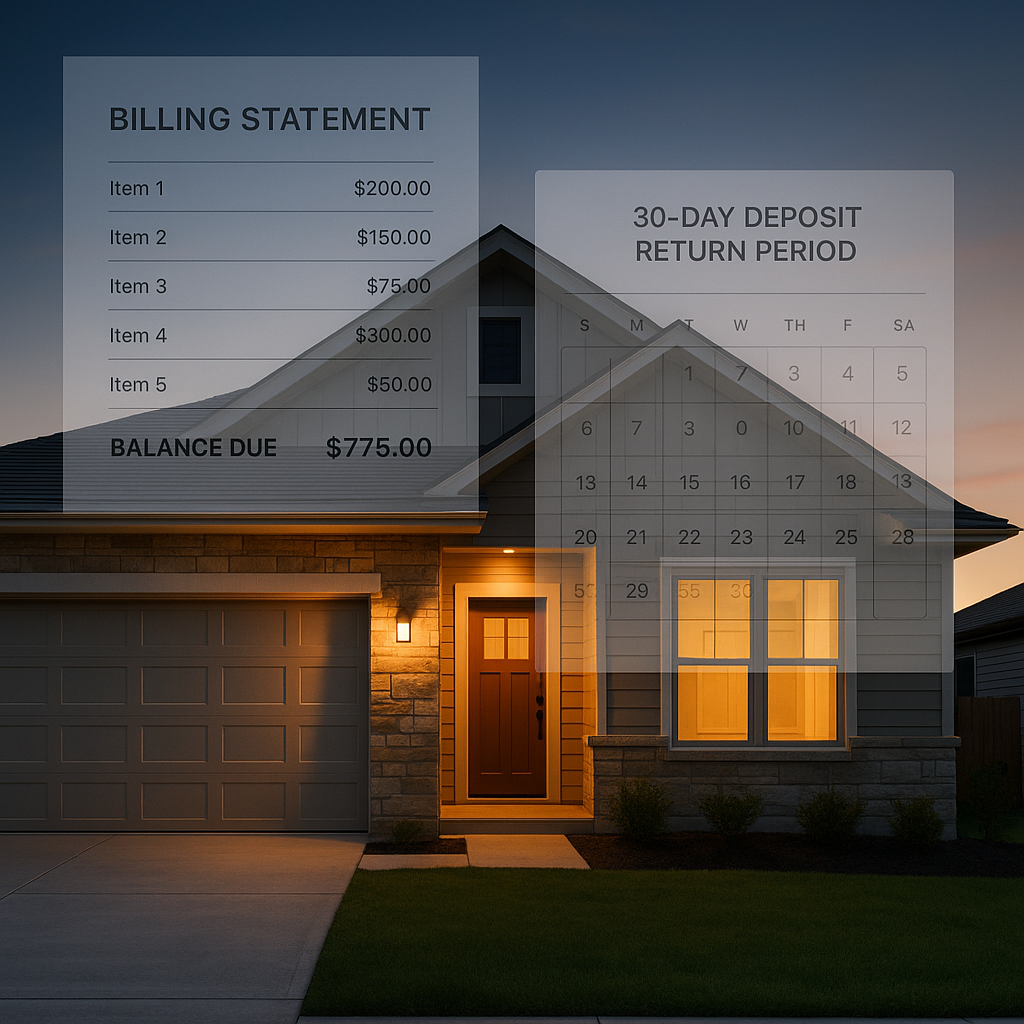
Texas law generally requires you to return the security deposit within 30 days after the tenant moves out and gives you a forwarding address. Therefore, returning security deposit Texas deadlines should be part of your move-out checklist.
The Texas Property Code Chapter 92 covers residential security deposit rules, including the forwarding address requirement and deduction process.
If you keep any part of the deposit, you must provide a written, itemized list of deductions. As a result, good records are not optional.
Failing to return the deposit or explain deductions can create penalties, disputes, and court risk. In short, sloppy deposit handling gets expensive fast.

What Can You Deduct?
You can deduct from the security deposit only for proper reasons. Common security deposit deductions Texas landlords may use include:
- Unpaid rent or utilities
- Repairs for damage beyond normal wear and tear
- Cleaning costs if the home was not returned reasonably clean
- Other lease-based charges, such as certain early move-out fees, when allowed by the lease and law
However, normal wear and tear is expected and cannot justify deductions. Faded paint, light carpet wear, or minor scuffs from ordinary use are usually not deductible damages.
Instead, focus on clear proof. Use photos, invoices, estimates, and inspection notes to support each deduction.
Meanwhile, late rent should be handled through a consistent process before it becomes a move-out deposit fight. Our guide on handling late rent explains that process in more detail.
Practical Tips to Stay Compliant
- Request a forwarding address in writing when tenants move out.
- Use detailed move-in and move-out inspections with photos.
- Keep clear records of deposits, deductions, notices, and tenant messages.
- Return the deposit and deduction list by a trackable method when possible.
- Use the same process every time, not a “we’ll figure it out later” system.
These steps save stress and money later. In addition, a clean rental move-in flow makes the move-out process much easier because everyone knows the starting condition.
Common Landlord Mistakes to Avoid
- Keeping deposits longer than the deadline without a valid reason.
- Deducting for normal wear and tear.
- Failing to document tenant-caused damage.
- Forgetting to ask for or verify the Texas tenant forwarding address.
- Using vague deductions like “repairs” or “cleaning” without details.
These errors can lead to tenant complaints and legal claims. Therefore, your best defense is a repeatable process, not a last-minute scramble with a camera roll and a prayer.
For broader systems, review our guide on how to reduce legal risk in property management operations.
Conclusion
Mastering deposit rules protects your income, your property, and your peace of mind. It also helps you run a more professional rental business in Amarillo and across the Texas Panhandle.
If you want help with this and the other details of property management, Blaze Real Estate can help keep your landlord operations organized and compliant. As a result, you can spend less time chasing paperwork and more time growing your investments.
FAQ: Texas Landlord Security Deposits
How long does a Texas landlord have to return a security deposit?
A Texas landlord generally has 30 days after the tenant moves out and provides a forwarding address. If deductions are made, the landlord should provide an itemized list.
Does Texas limit how much I can charge for a security deposit?
No. Texas does not set a statewide cap on residential security deposits. Still, the amount should make sense for your market, lease, and tenant screening standards.
What counts as normal wear and tear?
Normal wear and tear is expected use, such as minor scuffs, light carpet wear, or faded paint. Damage beyond normal use may be deductible if you can document it.
What if the tenant does not give a forwarding address?
The 30-day return period is tied to the tenant giving a forwarding address. Even so, landlords should document requests for the address and keep careful records.
Can I use the deposit for unpaid rent?
Yes, unpaid rent can often be deducted from the deposit if allowed by the lease and supported by records. For disputed issues, consult a qualified professional.