
If you invest in land in the Texas Panhandle, you already know the headline: this region does not always move like the rest of Texas. The Panhandle can look “cheap” next to Hill Country or Central Texas, but it is not a bargain bin. It is a different asset class with different drivers.
This guide is written for investors who want to understand land prices in the Texas Panhandle through an operator’s lens: what actually moves value here, what to underwrite, and where people get burned.
If you are comparing land to rental property, start with the same discipline you would use to analyze rental property in the Texas Panhandle: income, risk, condition, financing, and exit plan. Land is different, but the investor mindset is the same.
The real question behind land prices in the Texas Panhandle
Most investors are not just asking, “What is the price per acre?” They are really asking:
- What is pushing values up?
- What is holding values back?
- How do I compare one tract to another?
- What due diligence items change the long-term return?
In practice, Panhandle land pricing is usually a story about income potential plus risk. The two biggest levers are often water and alternative revenue, such as wind, solar, hunting, grazing, or CRP income.
Why Panhandle land does not price like “Texas land” online
Statewide headlines can mislead investors. Texas is huge. Rural land can be hot in one region and slow in another at the same time.
The Texas Panhandle is often tied more closely to:
- crop and cattle economics
- groundwater conditions
- tract size
- operational usefulness
- energy and infrastructure access
Also, do not confuse list price per acre with actual sale price per acre. Online portals may show high asking prices because they often include smaller tracts, improved parcels, recreational land, and ranchettes.
Closed sales usually tell the cleaner story. Asking prices are marketing. Sold prices are reality.
The biggest price drivers investors should underwrite
When we evaluate land prices in the Texas Panhandle, we start with a basic question: what can this tract reliably produce, and what could interrupt that income?
1) Water: the make-or-break variable
If you are buying irrigated or “irrigation-possible” land, value is tied to water reality. Not water hope.
In the Panhandle, groundwater is commonly tied to the Ogallala Aquifer. Conditions can vary widely by area and tract. Two parcels that look similar on a map can have very different long-term value.
Review:
- well production
- drawdown trends
- pumping costs
- equipment condition
- historical water use
- local groundwater rules
- spacing and infrastructure
The USGS has reported long-term water-level declines in the High Plains aquifer, including larger average declines in Texas than in several other states. That is why water should not be treated as a footnote in Panhandle land analysis. See the USGS report on High Plains aquifer water-level changes for broader context.
Investor takeaway: price per acre without water context is noise. If you want a long hold, water risk belongs in your underwriting. Think of it like roof life in a rental pro forma, except the roof is underground and the replacement cost is… complicated.
2) Ag commodity cycles and operating margins
Cropland and pasture values tie back to what an operator can pay and still survive the cycle.
When commodity prices and margins are strong, land can feel “obviously undervalued.” When input costs rise, rates increase, or yields suffer, that same land can become much more negotiable.
Investor takeaway: if your plan depends on peak-cycle rent or perfect yield assumptions, you are not underwriting. You are daydreaming with a calculator.
3) Interest rates and liquidity
Land is sensitive to financing conditions. Many buyers use debt, and even cash buyers compare land returns to safer options.
Higher rates can:
- reduce the buyer pool
- raise required returns
- slow marginal tracts
- pressure sellers who need to transact
Investor takeaway: when rates are higher, quality tracts tend to hold up better. Marginal tracts often sit longer or need price discovery.
If you are comparing land to rental property debt, the same rate discipline applies. Our guide on whether investors should refinance in a high-rate market is useful for thinking through leverage and risk.
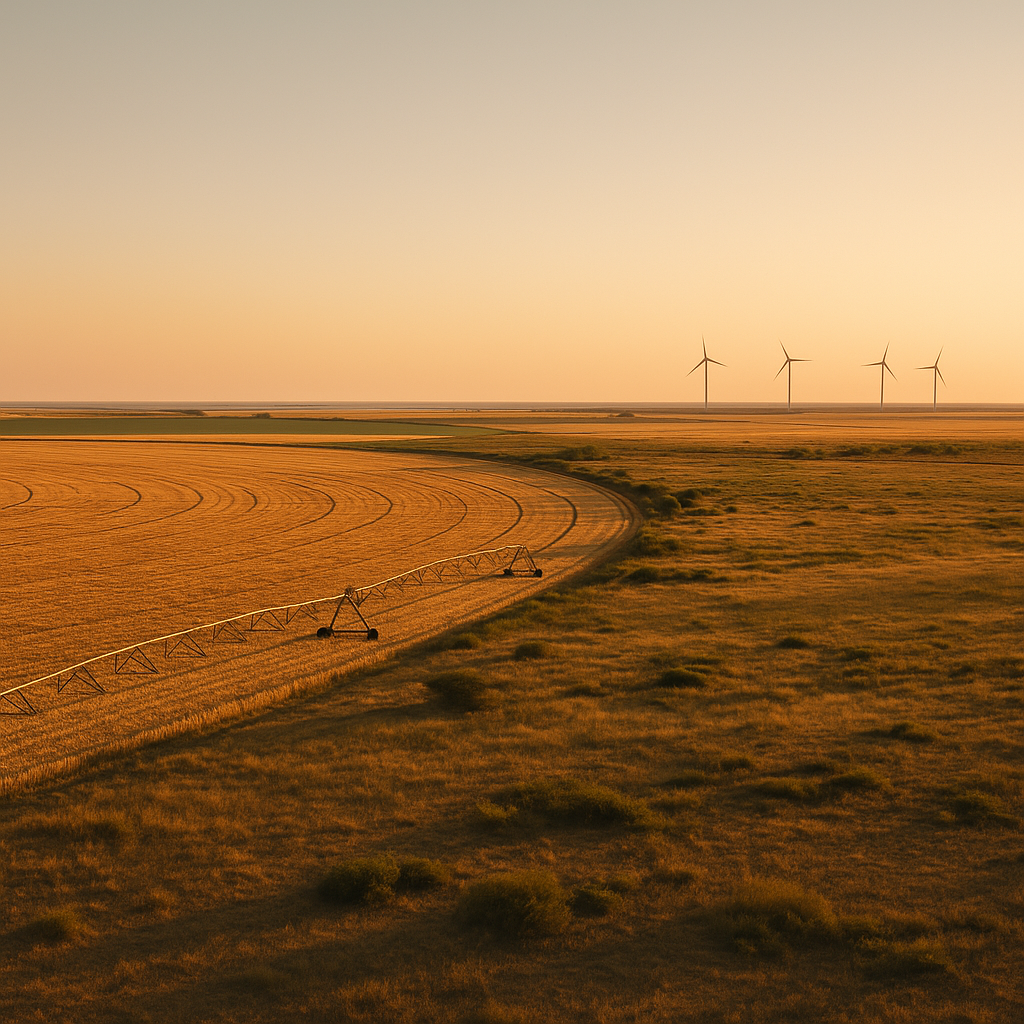
4) Wind and solar: income can change the valuation math
Renewable income can change land value, but it is not free money.
A real wind or solar opportunity depends on:
- transmission access
- interconnection feasibility
- developer demand
- lease terms
- setbacks
- surface-use impact
- compatibility with ag use
Investor takeaway: treat renewable upside like an option. Underwrite the base case without it. Then analyze the option value separately.
5) CRP and conservation income
CRP, or the Conservation Reserve Program, can create steady income for certain acreage. The key is the contract, not just the label.
Review:
- payment amount
- remaining term
- compliance requirements
- transferability on sale
- what happens when the contract ends
The USDA Farm Service Agency describes CRP as a voluntary program where producers remove environmentally sensitive land from agricultural production in exchange for yearly rental payments. Review the FSA’s Conservation Reserve Program information before treating CRP income as automatic or permanent.
Investor takeaway: CRP can smooth income, but you still need to understand the “after CRP” plan.
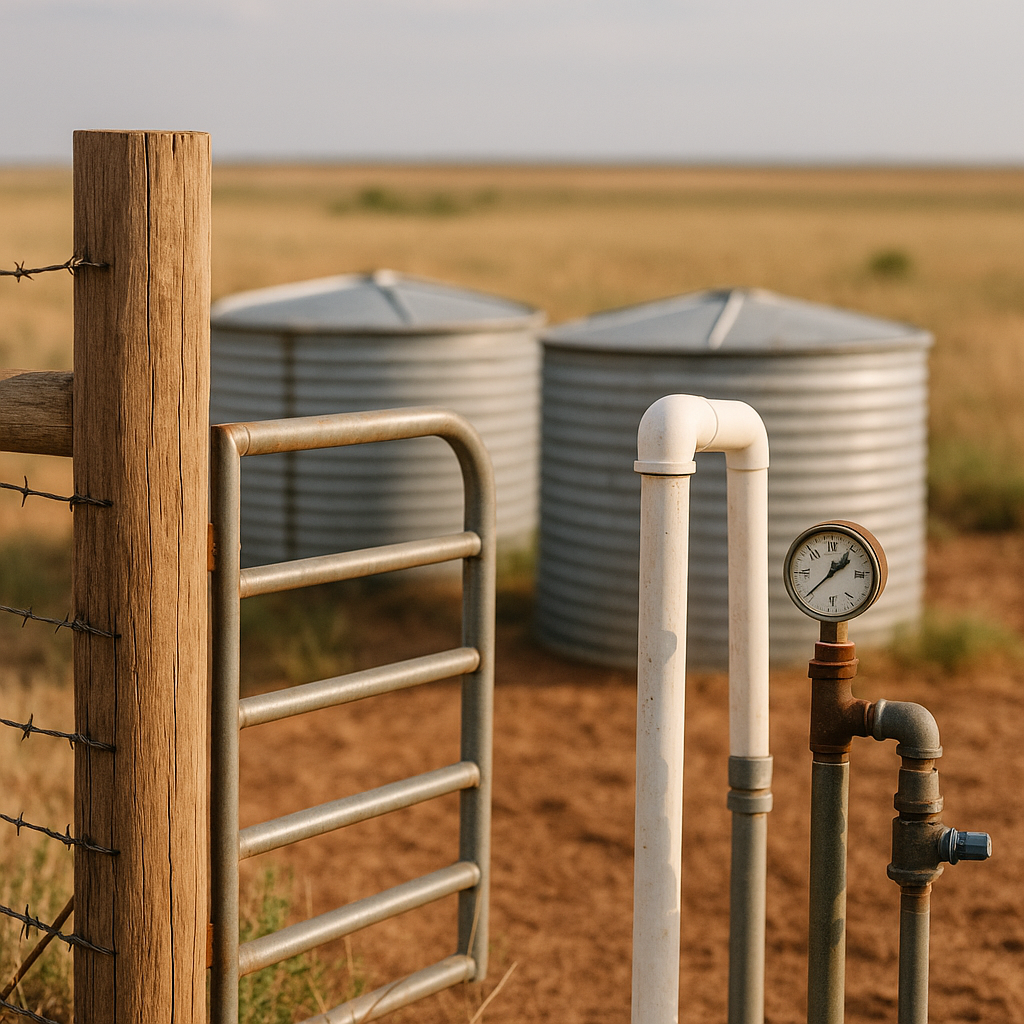
6) Minerals, access, and improvements
These items can push a deal from solid to problem child fast:
- mineral ownership vs. severed minerals
- easements and legal access
- fencing
- corrals
- tanks
- well infrastructure
- boundary clarity
- power availability and cost
Investor takeaway: in the Panhandle, operational details are not minor. They are often the difference between a tract that pencils and one that bleeds.
How to think about value: a practical investor approach
Here is the clean way to evaluate land prices in the Texas Panhandle without getting lost in stories from the coffee shop.
Start with the intended use
A tract priced for irrigated production should not be judged the same way as land priced for:
- dryland farming
- grazing
- hunting or recreation
- future development
- renewable energy leases
You cannot compare price per acre across different highest-and-best uses and expect clarity.
Use comps, but only the right comps
Good comps should match:
- county or area
- water profile
- irrigation capability
- soils and productivity
- tract size
- improvements
- access
If your comp set includes ranchettes with barndo sites and you are buying 640 acres of working ground, the analysis is already off.
Underwrite three cases: base, upside, and stress
Land investing is usually a long game. The Panhandle rewards investors who plan for boring years.
- Base case: sustainable rent or income with conservative expenses
- Upside case: renewables income, stronger yields, or better operator demand
- Stress case: dry years, higher rates, weaker tenant demand, or higher costs
If you also own rentals, this should feel familiar. The same discipline applies when you review rent rolls like a pro investor: verify the income, test the downside, and do not pay full price for a story.
Common bad advice we hear
“Land always goes up.”
Land can be resilient, but it is not immune to cycles, rates, water limits, or local demand.
Do this instead: underwrite a hold period and an exit plan that do not require perfect conditions.
“It has a well, so it is irrigated ground.”
A well existing and a well producing are two different things. Big difference. Wallet-sized difference.
Do this instead: verify well performance, condition, and historical use. Talk to people who know the area.
“Listings show $X per acre, so that is the market.”
Asking prices are marketing. Sales are reality.
Do this instead: focus on closed sales, days on market, price reductions, and the exact property type being sold.
“Wind or solar will pay for the whole deal.”
Sometimes renewable income helps. Sometimes it never arrives.
Do this instead: treat wind and solar upside as a bonus unless you have real documents, real terms, and a credible path to interconnection.
Due diligence checklist for Texas Panhandle land
No two tracts are identical, but this is the core checklist.
- Water: well logs, pumping tests if available, aquifer depth, equipment condition, and realistic irrigation capacity
- Soils and productivity: soil maps, crop history, erosion issues, and yield history if available
- Access: deeded access, easements, and public road frontage
- Improvements: fences, tanks, corrals, irrigation equipment, and what is actually functional
- Leases: ag leases, hunting leases, renewable options, and CRP contracts
- Title items: minerals, encumbrances, survey issues, and boundary clarity
- Power and infrastructure: availability, distance, capacity, and cost to connect or upgrade
We are not attorneys. If anything looks unusual, involve a Texas real estate attorney and a title company early. Cheap advice before closing usually beats expensive cleanup after closing.
Bottom line: pricing follows utility, and utility follows water plus income
For investors, land prices in the Texas Panhandle make the most sense when you stop viewing the Panhandle as “cheap Texas” and start viewing it as a utility-driven market.
Water matters. Income matters. Access matters. Lease terms matter. Exit strategy matters. Price per acre is only useful after you understand what the land can actually do.
If you want help evaluating a tract, especially water realities, lease structure, income potential, and what the comps are actually saying, Blaze Real Estate can help you think like an operator before you buy like an investor.
FAQ: Land Prices in the Texas Panhandle
What drives land prices in the Texas Panhandle?
The biggest drivers are water availability, soil productivity, income potential, tract size, access, improvements, leases, minerals, and buyer demand.
Why is water so important in Panhandle land values?
Water affects irrigation potential, operating costs, crop options, and long-term utility. Two similar tracts can have very different values if their water profiles differ.
Should investors use price per acre to compare land?
Price per acre is useful only when the tracts are truly comparable. Water, access, soils, improvements, leases, and intended use must be considered first.
Can wind or solar income increase land value?
Yes, but only when the opportunity is real. Investors should verify lease terms, transmission access, developer interest, and surface-use impacts before paying for that upside.
What should I review before buying Texas Panhandle land?
Review water records, soils, access, leases, title issues, minerals, improvements, power availability, CRP contracts, and realistic income potential.