
In Amarillo and across the Texas Panhandle, property management is not just about getting someone in the door.
At Blaze Real Estate, our priority is getting the right person in the door while keeping owners, residents, and assets protected.
Therefore, one of the simplest security steps we rely on is also one of the most overlooked in the industry:
driver’s license verification before every single showing.
It sounds basic. It is basic. However, it is also one of the strongest tools you have for security, liability protection,
and a professional showing process that sets your operation apart from “open door and hope for the best” landlords.
In short, a clear ID policy helps protect your rental, your team, and your future resident experience. If you are building a stronger process from the ground up, start with our landlording guide for the Texas Panhandle.
Want to See How Blaze Handles Secure Showings?
Curious how a professional showing and ID verification process works in real life?
Start with a quick conversation and see how Blaze Real Estate protects you and your property.
Schedule a consultation:
[blaze_pm_consult variant=”mini”]
Why driver’s license verification should be step one
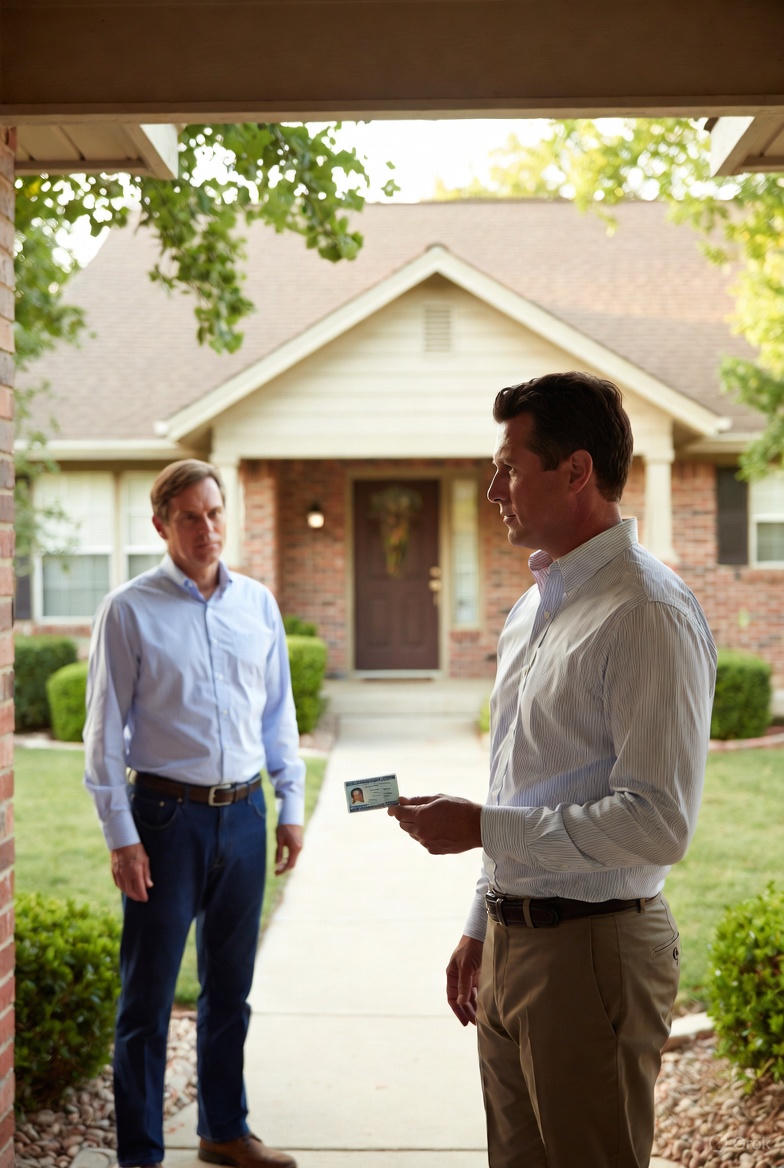
Before anyone walks through one of your rentals—vacant or occupied—you should know exactly who they are.
A government-issued ID gives you verified identity, a face that matches a name, and a starting point if you ever need to
follow up with law enforcement, your insurance company, or a qualified professional.
For example, picture this: a property is shown on Monday. On Thursday, the owner reports that items are missing or that someone has been
back on-site who should not be there. If you did not verify ID, you are guessing. If you did, you have a documented full name,
an address, a time and date stamp, and the team member who conducted the showing. That is the difference between
“we’re not sure who it was” and “here is our documented prospect with verified ID.”
Where Liability Meets Common Sense
Property managers live in a liability-conscious world. You are balancing fair housing compliance, owner expectations,
and the reality that if something goes wrong, people will ask what you did to prevent it. ID verification is one of those
reasonable precautions that shows you take security seriously.
In addition, when you apply the same policy to every prospect, it can support fair housing compliance rather than work against it.
You are not picking and choosing who you verify based on how they look, what they drive, or how they talk.
Instead, you are enforcing a clear, documented policy: we verify everyone, every time.
The Fair Housing Act prohibits discrimination in housing based on protected classes. Therefore, your showing rules should be written, consistent, and easy for your team to follow.
This kind of structure also plays well with insurers and owners. It demonstrates that your process is built around
risk reduction, accountability, and documentation—not just getting a signature on a lease as fast as possible. For more on risk control, see our guide to reducing legal risk in property management operations.
Building a Simple, Strong Verification Process

The good news is that a solid ID process does not need to be complicated or slow. At Blaze Real Estate, we treat it as
a standard part of the showing—not an extra step, not an optional add-on, and not something we “sometimes” do.
Step One: Set the Standard
Before any showing, the prospect is told that they will need to present a valid government-issued photo ID, such as a
driver’s license, passport, or state ID. This is communicated in advance when showings are scheduled and can be reinforced
in your listing description and confirmation messages.
Example showing language:
“For security and liability reasons, all property showings require a valid government-issued photo ID.
This policy applies to all prospective tenants and guests.”
Meanwhile, your leasing process should also explain what happens next. A clean showing process works best when it connects to your screening standards, lease rules, and move-in steps. Our guide to a rental move-in flow shows how those pieces fit together.
Step Two: Document the Details
During the showing check-in, your team member verifies the ID, confirms that the photo and name match the person in front of them,
and records a few essential details in a showing log or digital form. You do not need the full ID number—capturing only the last
four digits is often enough for internal records while still respecting privacy. Review your process with your attorney or compliance advisor if you have questions about recordkeeping.
A typical entry in your log might include the date and time, the prospect’s full name, the property address, the type of ID,
the last four digits of the ID number, and the name of the Blaze team member who conducted the showing. That is enough to create a usable record without turning your files into a treasure chest for identity thieves.
Step Three: Train Your Team to Own the Policy
A policy only works if your team is confident enforcing it. Every manager, leasing agent, and staff member who conducts showings
should know how to request ID, what to look for, and how to handle pushback. The tone should stay professional and matter-of-fact:
this is simply how Blaze protects owners, residents, and staff.
Still, training should also cover what you do not do—such as copying full ID numbers unnecessarily or leaving sensitive details
in unsecured files. Security and privacy go hand in hand.
When a Prospect Refuses to Show ID
So what happens when someone says, “I’m not comfortable showing my ID”? This is where policy clarity protects you.
You calmly explain that ID verification is a standard security requirement and that you apply it to everyone.
If they still refuse, you do not show the property. It is that simple.
As a result, a prospect who pushes hard against a basic security step is already telling you something about how they may behave as a tenant.
Once the refusal is clear, you document it in your system, thank them for their time, and move on. There are plenty of applicants
who will respect your process.
Red Flags You Should Pay Attention To
ID verification is not just about having something on file. It is also a moment to catch problems early. If the name on the ID does not
match the name they gave you, if the address is wildly out of sync with their story, or if they are vague, evasive, or trying to show a
single ID for multiple people, slow down and pay attention.
For example, a prospect who will not answer basic questions, rushes the appointment, or avoids normal screening steps may create more work later. Your instincts matter. One bad approval can cost more in lost rent, damages, and legal fees than an entire year of doing things
the right way. If problems continue after move-in, you also need a plan for broken lease rules.
Using Technology to Make This Easy
Modern property management tools can make this process almost frictionless. Digital forms, cloud-based logs, and secure ID tools
can capture information quickly, track repeat visitors, and feed prospect data into your screening workflow.
However, technology should not replace judgment. Your team still needs a written policy, consistent training, and secure data habits. The Federal Trade Commission offers practical guidance on data security for businesses that collect personal information.
For a team like Blaze Real Estate, which operates across multiple properties and submarkets, this also means consistency.
Whether the showing is in Amarillo, Canyon, or another Texas Panhandle community, the same rules and the same digital structure apply.
The Blaze Real Estate Bottom Line
License checks are not about being paranoid; they are about being professional. They protect your property,
support your fair housing practices, and create a clear record of who has been inside your units and when.
In short, when you build this into your process from day one, everything downstream gets easier. Showings are more controlled,
screening is cleaner, and owners feel confident that you are not treating their investment like an open house free-for-all.
Ready to Put a Stronger Process in Place?
If you are an owner in the Amarillo area or the wider Texas Panhandle and you want a management partner who takes security,
documentation, and professionalism seriously, Blaze Real Estate is built for you. We do not just talk about best practices—
we bake them into every showing, every applicant, and every property we manage.
FAQ: ID Checks Before Rental Showings
Should landlords verify ID before every rental showing?
Yes. A consistent ID check before every showing helps protect the property, the owner, residents, and staff. It also creates a clear record of who entered the home and when.
Does an ID policy create fair housing problems?
It should not if the policy is written, reasonable, and applied to every prospect the same way. Avoid picking and choosing who must show ID. When in doubt, review your policy with a qualified professional.
What if a prospect refuses to show ID?
If your policy requires ID for every showing, do not show the property when someone refuses. Calmly explain the rule, document the refusal, and move on.
Do I need to copy the full driver’s license?
Usually, you can document basic details without storing a full copy or full ID number. Keep only what your process truly needs, and store any personal information securely.
Why does Blaze use this step in the showing process?
Blaze uses ID checks to improve security, reduce risk, and keep the showing process consistent across Amarillo and the Texas Panhandle.